What Are the Benefits of Using Optical Fiber Cable?
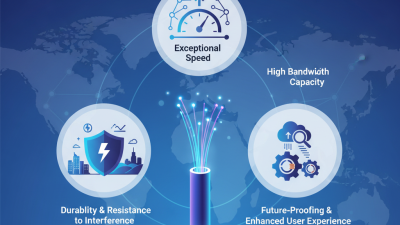
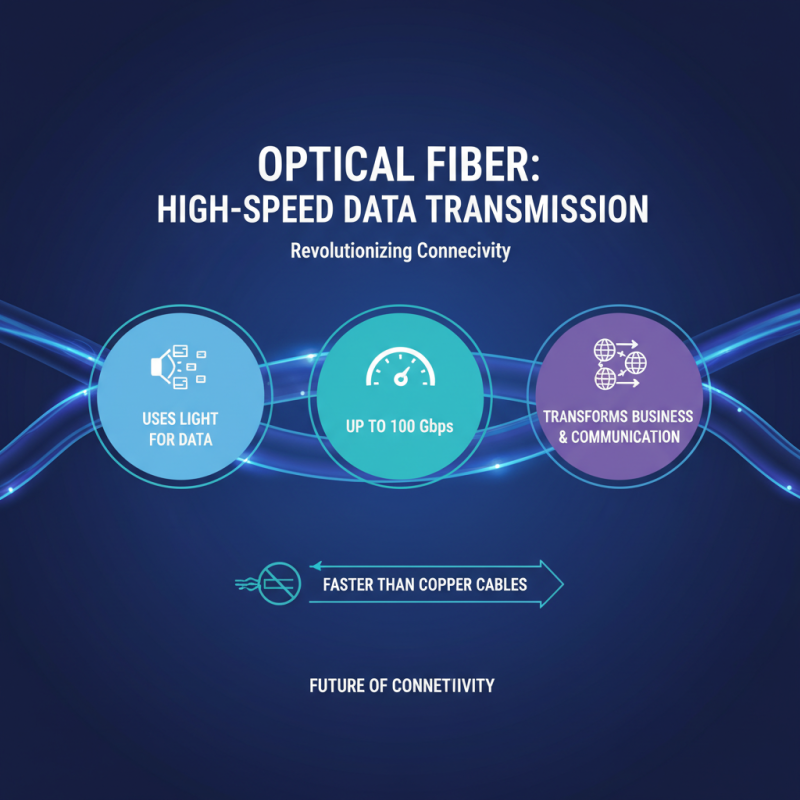
The use of Optical Fiber Cable has revolutionized communication and data transmission. This technology offers numerous advantages, making it a popular choice among industries. One major benefit is its ability to transmit data at incredibly high speeds. Optical fibers carry signals using light, leading to faster internet connections.
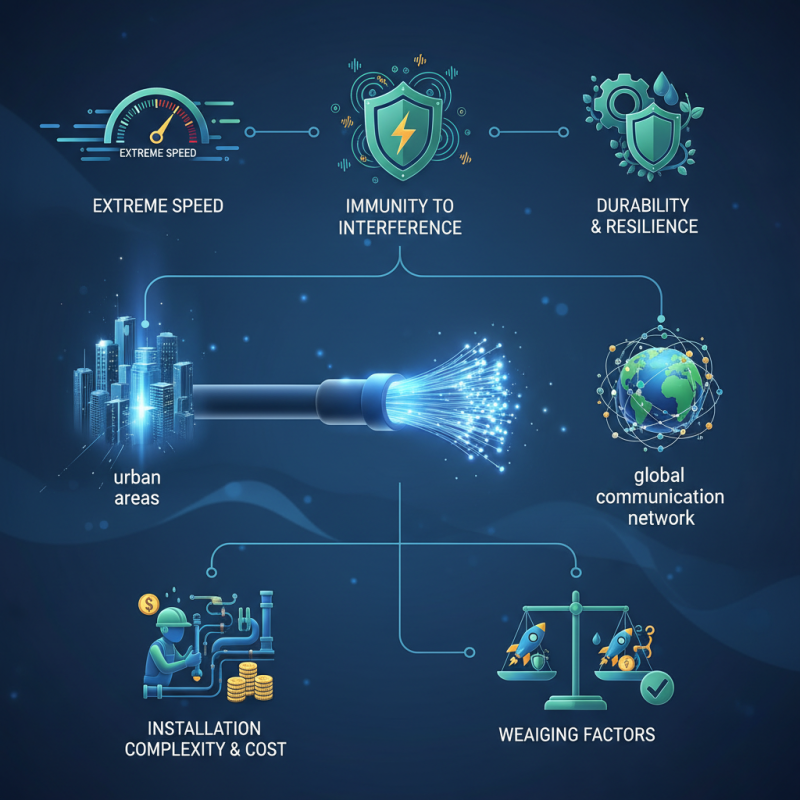
Additionally, Optical Fiber Cable is less susceptible to electromagnetic interference. This quality ensures a more reliable connection, especially in urban areas with numerous electronic devices. The durability of optical fibers also stands out. They are resistant to harsh environmental conditions and can maintain performance over long distances.
Despite these advantages, some may wonder about the installation complexities and costs involved. Transitioning from traditional copper wiring to Optical Fiber Cable can require substantial investment and expertise. It's crucial to weigh these factors against the benefits when considering fiber options. Ultimately, the choice of Optical Fiber Cable may enhance network efficiency and reliability.
Advantages of Optical Fiber Cable Over Traditional Copper Cable
Optical fiber cables have transformed the landscape of data transmission. Unlike traditional copper cables, they use light instead of electricity. This shift offers numerous advantages. One major benefit is speed. Optical fiber can transmit data at speeds over 1 Gbps, far surpassing copper, which struggles to keep pace. This incredible speed enhances internet performance and supports high-bandwidth applications.
Another significant advantage is the increased bandwidth. Optical fiber cables can carry a larger volume of data. This makes them more suitable for extensive networks, particularly in urban areas where demand is high. Furthermore, optical fibers are less prone to interference. Copper cables can be affected by electromagnetic interference, reducing signal quality. In contrast, fibers remain stable in various environments, offering consistent performance.
However, there are considerations. Fiber installation can be complex and costly in some regions. Trenching or running cables through existing structures may also pose challenges. While the benefits are evident, the transition requires careful planning. Potential users should weigh costs against long-term gains. Overall, understanding these aspects can lead to more informed decisions regarding network infrastructure.
High-Speed Data Transmission Capabilities of Optical Fiber
Optical fiber cables revolutionize data transmission. They use light to send information, allowing for faster speeds compared to conventional copper cables. This technology can transmit data at speeds up to 100 Gbps. Such high-speed capabilities transform how businesses operate and communicate.
The efficiency of optical fibers stems not just from speed, but also from reduced signal loss. Information travels long distances with minimal degradation. However, installation can be complex, requiring skilled professionals. This complexity can deter some from making the switch.
Despite these challenges, the benefits outweigh the drawbacks. High-speed data transmission can enhance streaming services and cloud applications. For many, the investment in optical fiber leads to future-proofing their network. Understanding these nuances is crucial for informed decisions.
Increased Bandwidth and Its Importance in Modern Communication
Optical fiber cables have revolutionized communication by significantly increasing bandwidth. Bandwidth refers to the amount of data transmitted in a given time. In an era where streaming, gaming, and remote work dominate, having high bandwidth is essential. Optical fibers can carry vast amounts of data over long distances with minimal loss, making them ideal for modern communication needs.
Using optical fiber means faster internet speeds. Users experience smoother streaming and quicker downloads. For businesses, high bandwidth translates to higher productivity. Teams collaborate in real-time without interruptions. Yet, despite the advantages, transitioning to fiber can be daunting for some. There are installation costs and learning curves involved. Not every area is equipped with the necessary infrastructure.
Another aspect to consider is the changing technology landscape. As data consumption grows, the demand for bandwidth will continue to rise. Future applications, like virtual reality and smart cities, will require even more capacity. While optical fiber represents a forward leap, one must think critically about its overall implementation. The promise of higher bandwidth is enticing, but it must be balanced with practical considerations.
What Are the Benefits of Using Optical Fiber Cable? - Increased Bandwidth and Its Importance in Modern Communication
| Benefit |
Description |
Impact on Modern Communication |
| High Bandwidth |
Optical fiber offers higher data transmission rates compared to copper cables, capable of supporting multi-gigabit throughputs. |
Enables fast internet services, cloud computing, and big data analytics. |
| Longer Distance Transmission |
Data can be transmitted over longer distances without significant loss of signal quality. |
Essential for connecting remote areas and ensuring reliable communication across vast distances. |
| Immunity to Electromagnetic Interference |
Optical fibers are not affected by electromagnetic interference, reducing signal degradation. |
Improves the reliability of data transmission in urban and industrial environments. |
| Security |
Fiber optics are more secure as they are difficult to tap into without detection. |
Enhances security for sensitive data transmission in corporate and governmental applications. |
| Cost-Effectiveness |
Though initially more expensive, the reduced maintenance costs and longer lifespan lead to overall savings. |
Making investments in infrastructure more sustainable long-term. |
Enhanced Signal Quality and Reduced Interference in Fiber Optics
Optical fiber cables have revolutionized communication systems. Enhanced signal quality is one of their key advantages. Unlike traditional copper cables, fiber optics transmit data using light signals. This method results in less signal degradation over long distances. As a result, users experience clearer calls and faster internet speeds.
Signal interference is another concern addressed by fiber optics. The structure of optical fibers minimizes outside interference from electromagnetic signals. This means fewer disruptions during data transmission. For industries relying on constant connectivity, this attribute is invaluable. Businesses can trust their communications will remain stable and reliable.
However, optical fiber installation can pose challenges. The cost of fiber optics may be higher initially. Additionally, the installation process requires precision and expertise. There is a learning curve for those unfamiliar with this technology. Users must be prepared for these hurdles while benefiting from greater efficiency.
Benefits of Using Optical Fiber Cable
Cost-Effectiveness and Longevity of Optical Fiber Infrastructure
Optical fiber infrastructure offers impressive cost-effectiveness and longevity. According to a report by the International Telecommunications Union (ITU), fiber optic cables can last over 25 years, significantly reducing replacement costs compared to traditional copper wires. The low-maintenance nature of these cables means fewer repairs and interruptions in service, which can enhance a business's productivity.
Initial installation costs for optical fiber may be higher, but the long-term ROI can be substantial. Studies from the Fiber Broadband Association (FBA) show that businesses experience an average savings of 20-30% in operational expenses over a decade due to reduced energy consumption and maintenance needs. The durability of optical fiber also counters the need for frequent upgrades, as advancements in technology can be integrated without replacing the entire system.
Yet, while the benefits are clear, transitioning to optical fiber can be daunting. Organizations may face challenges in finding skilled technicians for installation. Not all regions have equal access to fiber infrastructure, which can hinder adoption. Moreover, the initial investment can be a barrier for smaller businesses, despite the long-term financial benefits. Navigating these hurdles requires a thoughtful approach, balancing immediate costs with future savings.