What Are the Best Materials for Network Cables?
The choice of materials for network cables greatly impacts performance and durability. Various network cable materials can influence signal quality, attenuation, and overall speed. According to the Telecommunications Industry Association (TIA), over 90% of data transmission relies on copper and fiber optic materials. Though copper cables such as Cat5e and Cat6 are widely used, their limitations in speed and distance are evident.
Fiber optics provide greater bandwidth and speed. They also resist electromagnetic interference effectively. In a study by Malinowski Research, fiber optic networks were found to offer 20 times faster data transfer rates than traditional copper. However, they are more expensive to install and maintain.
Choosing the right network cable material is crucial. Cost, performance, and application should be considered carefully. Mistakes in selection can result in suboptimal network performance, leading to losses. Evaluating each material's strengths and weaknesses is essential to avoid long-term issues.

Types of Network Cables and Their Uses
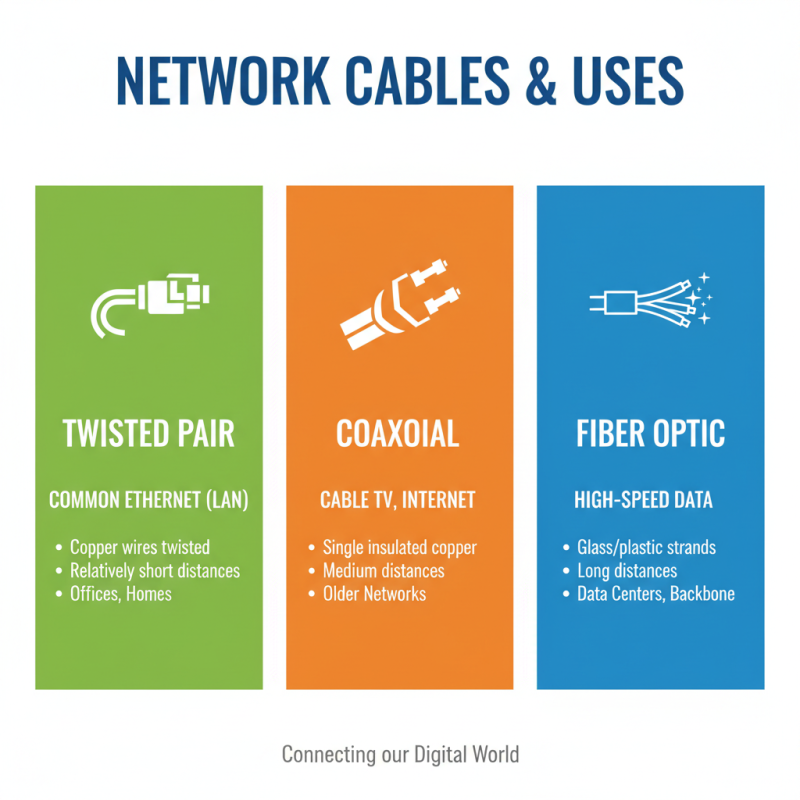
Network cables are essential for connecting devices. Different types serve various purposes. The most common types include twisted pair, coaxial, and fiber optic cables. Each type has unique characteristics and specific uses.
Twisted pair cables are widely used in local area networks (LANs). They come in shielded and unshielded versions. According to industry reports, about 90% of network installations utilize twisted pair cables. These cables transmit data effectively over short distances, making them ideal for office settings. However, they are susceptible to electromagnetic interference, which can affect performance.
Coaxial cables find their niche in cable television and broadband internet. They are more durable than twisted pair cables, with better performance over longer distances. Studies suggest coaxial cables can transmit signals up to 500 meters with minimal loss. However, they are bulkier, making installation in tight spaces challenging.
Fiber optic cables are gaining traction due to their high speed and bandwidth capabilities. They use light to transmit data, allowing for faster communication. Reports indicate that fiber optic installations are expected to grow by 15% annually. The downside? They require careful handling and can be more expensive. Each cable type has its pros and cons, influencing the best choice for different situations.
Key Materials Used in Network Cable Construction
When it comes to network cable construction, the choice of materials plays a crucial role. Copper and fiber optics are the two most common materials. Copper is widely used due to its excellent conductivity. It is affordable and has been a reliable choice for many years. However, copper cables are susceptible to interference. They can also degrade over time if not properly maintained.
Fiber optic cables, on the other hand, offer higher bandwidth and faster data transmission. Made from glass or plastic, they are immune to electromagnetic interference. This makes them ideal for high-speed networks. Yet, fiber optics can be more fragile. Installation requires specialized skills, which can lead to higher costs.
In many scenarios, the decision hinges on specific needs. Copper may suffice for basic home networks, while businesses often require fiber optics for their greater reliability and speed. Understanding these materials can help in making informed choices. But which is truly the best for your situation? That remains a point for continuous consideration and discussion.
Comparing Copper vs. Fiber Optic Materials
When comparing copper and fiber optic materials for network cables, several factors come into play. Copper cables are widely used due to their electrical conductivity. They are effective for shorter distances, typically up to 100 meters for Ethernet. According to a report from the Fiber Optic Association, copper can be less expensive initially, but its performance diminishes as data requirements increase.
On the other hand, fiber optic cables offer significant advantages for long-distance data transmission. They can transmit data over several kilometers without signal loss. A study from the Telecommunications Industry Association indicates that fiber optics can achieve speeds exceeding 1 Gbps, making them ideal for high-demand applications. However, their installation is often more complex and costly, requiring specialized skills.
Copper cables are still prevalent, but the shift towards fiber optics signals a change in industry standards. Not every business needs fiber optics, but evaluations based on specific needs are crucial. Depending on the application, the choice between these materials can lead to performance trade-offs that warrant careful consideration.
Factors Influencing Performance of Network Cable Materials
When choosing materials for network cables, several factors can influence performance. The type of conductor plays a crucial role. Copper is often preferred for its excellent conductivity. Reports show that copper cables can transmit data effectively over long distances. However, copper is costly compared to aluminum. Aluminum cables are lighter, but they can introduce more resistance, which affects speed.
Insulation materials also matter. PVC is commonly used because it is durable and cost-effective. However, in environments requiring higher safety measures, low-smoke zero-halogen (LSZH) materials are better. They reduce toxic emissions during fire incidents. According to a recent safety report, LSZH cables can decrease emergency risks, making them ideal for sensitive areas.
Cable shielding is another critical factor. Shielding protects the signal from interference. Foil and braided shields are common types. Using shielded cables can improve performance by up to 20%, especially in urban settings with high electromagnetic interference. But adding extra shielding raises the cost and complexity of installations. It’s important to balance performance with budget constraints.
What Are the Best Materials for Network Cables? - Factors Influencing Performance of Network Cable Materials
| Material Type |
Electrical Conductivity (S/m) |
Maximum Frequency (MHz) |
Transmission Distance (m) |
Shielding Type |
| Copper |
5.8 x 10^7 |
1000 |
100 |
Unshielded |
| Fiber Optic |
N/A |
10000 |
3000 |
None |
| Aluminum |
3.5 x 10^7 |
100 |
50 |
Shielded |
| Cat 6 Cable |
5.5 x 10^7 |
250 |
55 |
Twisted Pair |
| Cat 7 Cable |
5.5 x 10^7 |
600 |
100 |
Screened Twisted Pair |
Future Trends in Network Cable Materials and Technologies
The future of network cable materials is evolving rapidly. Researchers are focusing on new fibers and improved insulation techniques. The rise of 5G and IoT is pushing demands higher. A report from TechInsights projected that optical fiber demand would surge by 10% each year through 2026. This indicates a shift towards more efficient transmission.
Materials such as polyvinyl chloride (PVC) and low-smoke zero-halogen (LSZH) are gaining traction. They offer safety and durability. However, their environmental impact remains a concern. Reports show that around 30% of cables contribute to e-waste, posing a recycling challenge. Some manufacturers are experimenting with biodegradable options. This move is crucial, but the cost may deter widespread adoption.
Copper cables are still widely used. Yet, they face limitations in bandwidth and distance. The industry will need to adapt. Innovations like carbon nanotube cables have shown promise. They can potentially reduce weight and increase efficiency. However, production costs and scalability are still obstacles that need attention. The path forward is complex, requiring a balance between performance and sustainability.
Best Materials for Network Cables