Why Does Network Cable Material Matter for Your Connectivity?
In today's digital landscape, the choice of Network Cable Material significantly affects connectivity. Research from industry leaders indicates that materials directly influence data transmission speeds and signal integrity. For instance, fiber optic cables offer higher bandwidth compared to copper cables, making them essential for high-speed internet requirements.
Over 80% of IT professionals agree that material choice matters. They see a direct correlation between cable material and network performance. Copper cables can suffer from interference, while fiber optics minimize signal loss over long distances. This often results in enhanced user experiences, especially in data centers.
However, some organizations continue to overlook the importance of Network Cable Material. Many stick to traditional copper cables without assessing their long-term impact. This decision may lead to unnecessary slowdowns and connectivity issues. Being aware of material specifications can help businesses make informed choices, ultimately leading to a more robust network infrastructure.
Types of Network Cable Materials and Their Properties
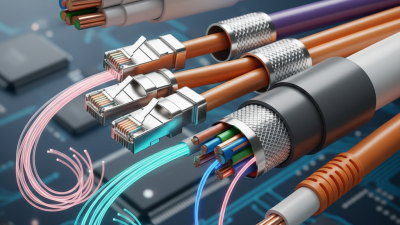
When it comes to network cables, material choice is crucial. Copper and fiber optic are the two main types, each possessing unique properties. Copper cables are popular for their flexibility and ease of installation. They conduct electricity well, which makes them efficient for short distances. However, they are also prone to interference, especially in environments with many electrical devices.
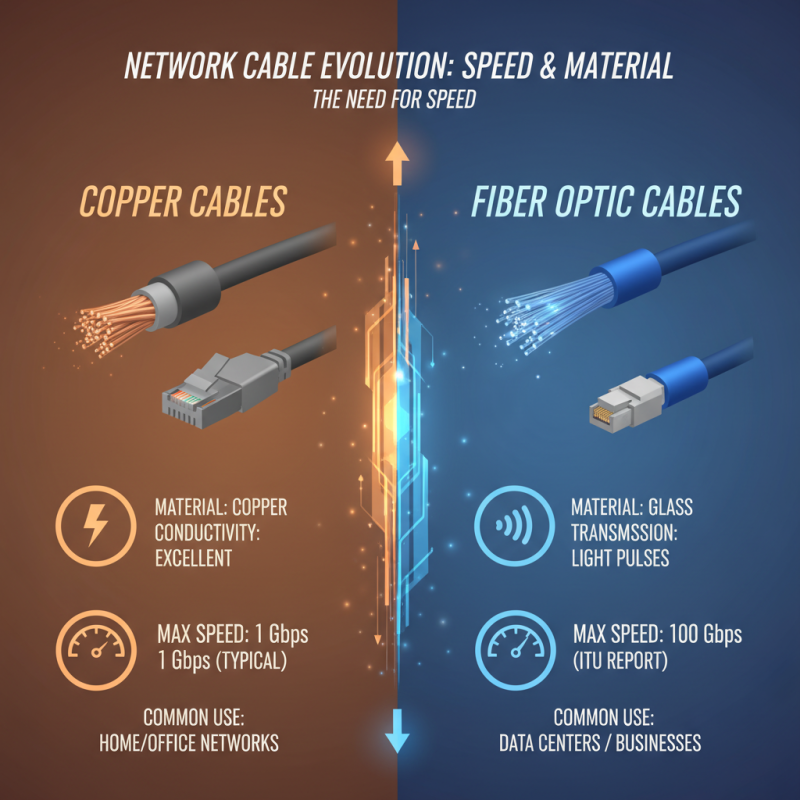
On the other hand, fiber optic cables use glass or plastic fibers to transmit data. These cables can deliver data over much longer distances without loss. According to a report by the International Telecommunication Union, fiber optics can achieve speeds of up to 100 Gbps, which is far superior to copper’s typical 1 Gbps. However, fiber cables are more delicate and can be expensive to install.
Additionally, materials like aluminum are sometimes used. They are lighter and cheaper but can lead to higher resistance and lower performance. Users may experience slower speeds. It's vital to evaluate your specific needs and environment before choosing a cable type. Different factors, such as budget and installation ease, should be carefully considered. Ultimately, the right material can significantly impact network performance and reliability.
Impact of Cable Material on Signal Quality and Speed
When it comes to network cables, the material matters significantly. Copper is widely used due to its excellent conductivity. However, fiber optics, made of glass, can transmit data at much higher speeds. According to a recent report by the International Telecommunications Union, fiber-optic cables can reach speeds up to 100 Gbps. This is a game-changer for data centers and businesses needing fast connectivity.
Signal quality is affected by the material used. Copper cables are susceptible to electromagnetic interference. This can lead to signal degradation, especially in long runs. On the other hand, fiber optics offer immunity to such interference. A study from the Fiber Broadband Association shows that fiber installations can reduce signal loss to less than 0.5 dB/km. This difference in performance is crucial for high-demand environments.
Moreover, the longevity of the materials impacts overall performance. Copper cables can corrode over time, affecting speed and reliability. In contrast, fiber cables can last decades with minimal degradation. A research paper from the Journal of Optical Communications highlights that properly installed fiber can maintain signal quality for over 30 years. Choosing the right cable material is key to ensuring optimal connectivity.
Durability and Longevity: Material Considerations for Networking
When setting up a network, choosing the right cable material impacts durability. Different materials offer varied levels of resistance to wear and tear. Copper, for example, is a popular choice. It conducts signals efficiently but can corrode over time. An exposed copper cable might not last long in harsh environments.
Fiber optic cables are another alternative. They are less prone to environmental damage. However, they can be more fragile. Bend them too much, and they might break. It's essential to balance strength and flexibility when choosing materials. Quality matters, but not every high-priced option guarantees longevity. Sometimes, less expensive choices hold up better under specific conditions.
Avoid overlooking installation conditions too. A well-made cable can fail if not installed correctly. Twists or improper terminations can reduce performance. Think about where your cables will be run. Will they face heat, moisture, or physical pressure? These factors can shorten a cable's lifespan. Always consider environment specifics when making a choice.
Why Does Network Cable Material Matter for Your Connectivity?
This chart illustrates the durability and longevity of various network cable materials, highlighting important factors that influence connectivity performance.
Cost vs. Performance: Evaluating Different Cable Materials
When it comes to network cables, the material plays a crucial role in determining performance. Different materials have unique properties that influence connectivity. For example, copper is widely used due to its ability to conduct electricity efficiently. It offers high speed and bandwidth. However, it can be more expensive than alternatives.
Fiber optic cables, on the other hand, use glass or plastic fibers. They transmit data as light signals. This allows for significantly higher speeds over longer distances. The cost of fiber optic cables can be daunting for some. Installation may also require specialized skills.
Another option is aluminum cables. They provide a budget-friendly alternative to copper. However, their performance may not match copper's quality. It’s essential to consider how much you value speed versus cost. Sometimes, saving money upfront can lead to issues later. Reflecting on your specific needs can lead you to the right choice for connectivity.
Why Does Network Cable Material Matter for Your Connectivity?
| Cable Material |
Cost per Meter (USD) |
Performance (Mbps) |
Durability (Years) |
Best Use Case |
| Copper |
$0.50 |
100 |
5-10 |
Home Networking |
| Fiber Optic |
$1.50 |
1000 |
25+ |
High-Speed Internet |
| Aluminum |
$0.30 |
10-100 |
3-5 |
Budget Networks |
| Cat6a (Copper) |
$0.80 |
1000 |
10-15 |
Office Networking |
| Cat7 (Copper) |
$1.00 |
10000 |
10-15 |
Data Centers |
Future Trends in Network Cable Materials for Enhanced Connectivity
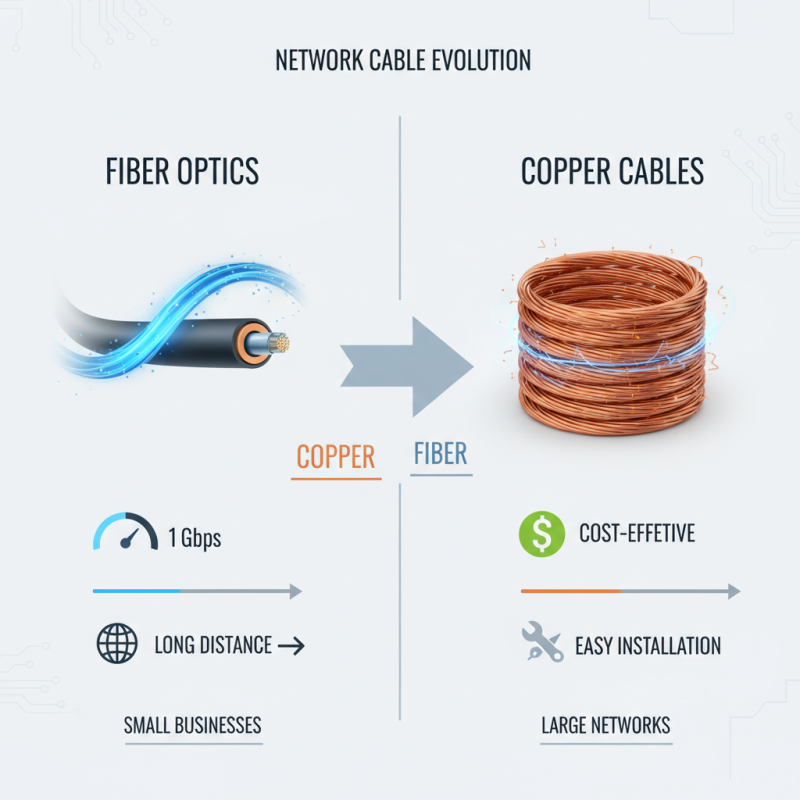
The world of network cable materials is evolving rapidly. Recent studies show that the choice of material impacts data transfer speeds significantly. Fiber optics dominate the market, offering speeds up to 1 Gbps over long distances. However, copper cables still play a crucial role, especially in smaller setups. They are cost-effective and easy to install, making them popular among small businesses.
As technology progresses, new materials like carbon nanotubes and graphene are being explored. These materials promise higher conductivity and reduced signal loss. A report by a leading telecommunications agency indicates that solutions incorporating these materials could increase data capacity by up to 100 times compared to traditional cables. This innovation could reshape connectivity, particularly in urban environments.
Tip: Choose cables that align with your future needs. Anticipate data growth to avoid frequent upgrades. Consider a mix of materials for flexibility and cost-effectiveness.
Looking ahead, sustainability is also a key focus. As the industry pushes for greener solutions, biodegradable materials may emerge. While the potential benefits are exciting, there are still questions about durability and cost. We must explore the balance between innovation and practicality.