Why is Optical Fiber Cable the Best Choice for High Speed Internet Access
In today's digital age, the demand for high-speed internet access has never been more critical. As consumers and businesses alike prioritize seamless connectivity, the choice of infrastructure becomes paramount. Optical Fiber Cable stands out as the premier option for delivering exceptional speed and reliability. Renowned industry expert Dr. Emily Hartman, a leading figure in telecommunications research, emphasizes the transformative potential of this technology, stating, "Optical Fiber Cable not only increases bandwidth capacity but also ensures faster data transmission with minimal signal loss."
The advantages of Optical Fiber Cable extend beyond mere speed; they encompass durability and resistance to interference, making them ideal for both urban and rural deployments. As internet usage spikes and applications become more data-intensive, the need for a robust solution is evident. The transition from traditional copper wiring to Optical Fiber Cable offers a pathway to future-proofing our internet infrastructure, enabling unprecedented connectivity and enhancing the overall user experience.
In summary, the shift to Optical Fiber Cable is not just a trend but a necessity for ensuring that we can meet the ever-growing demands of high-speed internet. As we delve deeper into the reasons why Optical Fiber Cable is the best choice, it becomes clear that it plays a crucial role in shaping a faster, more connected world.

Understanding Optical Fiber Cable Technology
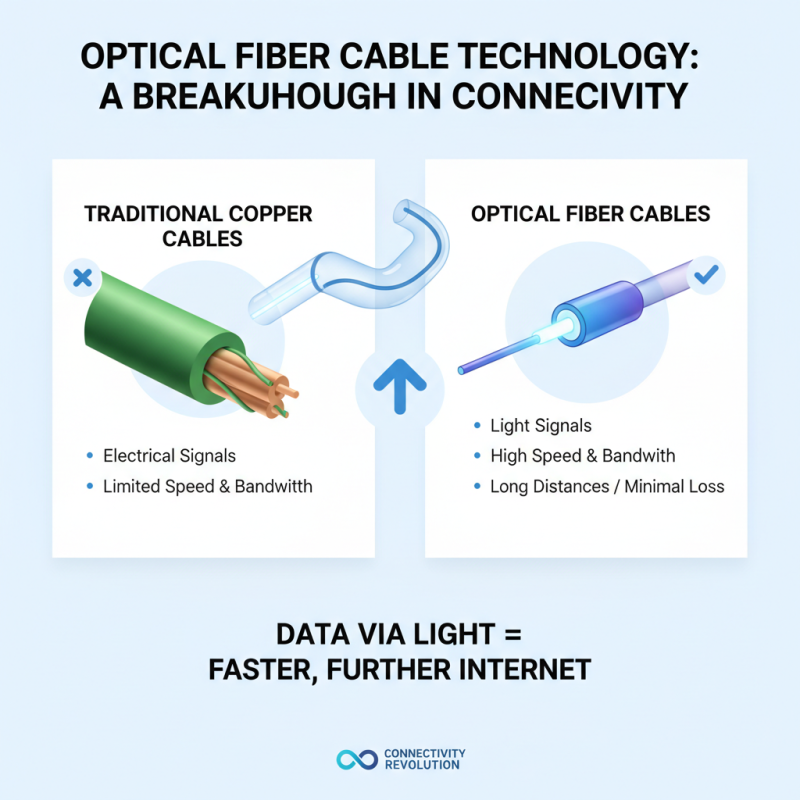
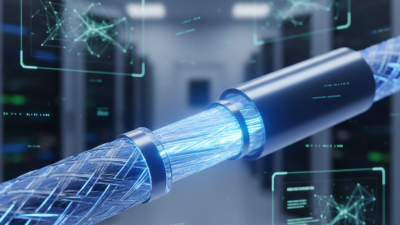
Optical fiber cable technology is a groundbreaking innovation that has transformed the landscape of internet connectivity. Unlike traditional copper cables that transmit data through electrical signals, optical fibers use light to carry information over long distances. This method offers substantial advantages in terms of speed and bandwidth. The core of an optical fiber is made of glass or plastic, which allows light to travel with minimal signal loss, making it possible to achieve high data transfer rates without degradation.
One of the key components of optical fiber technology is the principle of total internal reflection. When light enters the fiber, it reflects at the core-cladding boundary, allowing the signal to propagate effectively even over long distances. This enables telecom companies to transmit data thousands of kilometers without the need for signal boosters. Additionally, optical fiber cables are less susceptible to electromagnetic interference compared to their copper counterparts, ensuring a more stable and reliable connection. With the ongoing advancements in fiber optics, they continue to be the preferred choice for high-speed internet access, paving the way for faster and more efficient digital communication networks.
Advantages of Optical Fiber Over Traditional Copper Cables
Optical fiber cables have emerged as the superior choice for high-speed internet access, predominantly because of their numerous advantages over traditional copper cables. One of the most significant benefits is bandwidth capacity. According to a report by the International Telecommunication Union (ITU), optical fiber can support data rates exceeding 1 Gbps over distances up to several kilometers without degradation. In contrast, copper cables typically struggle to maintain speeds above 100 Mbps over longer distances due to signal loss and electromagnetic interference.
Moreover, optical fiber cables offer enhanced reliability and durability. Unlike copper, fiber optic cables are immune to electromagnetic interference, which makes them particularly effective in urban settings where there are numerous competing signals. Studies have shown that optical fibers can handle demanding environments, with failure rates substantially lower than traditional copper cables, reducing the need for costly repairs and maintenance. This reliability is essential for businesses and homes that depend on stable internet connections for their daily operations.
Tip: When considering a switch to optical fiber, it's beneficial to look for service providers that offer scalability options. As the demand for higher speeds increases, the ability to upgrade fiber optic services without significant infrastructure changes can help future-proof your internet access.
Advantages of Optical Fiber Over Traditional Copper Cables for High-Speed Internet
Impact of Optical Fiber on Internet Speed and Bandwidth
Optical fiber technology has revolutionized internet access, significantly enhancing both speed and bandwidth compared to traditional copper cables. According to a report from the Federal Communications Commission (FCC), fiber-optic networks can deliver speeds exceeding 1 Gbps, a stark contrast to the average broadband speeds of around 25 Mbps offered by older technologies. This dramatic difference is largely due to the physical properties of fiber optics, which use light to transmit data, allowing for immense data throughput and minimal signal degradation over long distances.
Furthermore, the capacity of optical fiber to support a larger bandwidth is unparalleled. Research from the International Telecommunication Union (ITU) indicates that optical fiber can support bandwidths of up to 100 Gbps per channel, with potential for future upgrades to terahertz levels. This capability makes fiber-optic cables particularly advantageous for high-demand applications, such as 4K streaming, online gaming, and cloud computing. As more households and businesses adopt higher-quality streaming services and IoT devices, the need for faster and more reliable internet connections continues to grow, making optical fiber the preferred choice for high-speed internet access.
Applications of Optical Fiber in Modern Communication Networks
Optical fiber technology has become the backbone of contemporary communication networks, enabling a plethora of applications that require high-speed data transmission. One of the most significant applications of optical fiber is in internet connectivity. By utilizing light to transmit data, optical fibers facilitate faster download and upload speeds compared to traditional copper cables. This capability is crucial for businesses and residential users alike, as it supports bandwidth-intensive activities such as video conferencing, online gaming, and streaming high-definition content.
Moreover, optical fibers play a vital role in telecommunication systems, enhancing the quality and reliability of voice and data communication. They are employed in backbone infrastructures that connect cities and regions, serving as the highway for the internet. Additionally, optical fiber is integral to the deployment of 5G networks, which require robust infrastructure to handle increased data traffic.
Beyond internet access, optical fibers are also instrumental in smart city developments, healthcare applications, and remote sensing technologies, showcasing their versatility and essential role in modern society.
Future Trends in Optical Fiber Technology for Internet Access
The future of optical fiber technology for internet access holds promising advancements that are set to redefine how we connect and communicate. One of the key trends is the development of enhanced fiber optic materials that allow for greater capacity and efficiency. Researchers are investigating new fiber compositions and structures to minimize signal loss and maximize data transmission rates. This innovation not only improves the speed of existing networks but also paves the way for next-generation applications requiring ultra-high-speed connectivity, such as virtual reality and 8K streaming.
Moreover, the integration of advanced technologies such as artificial intelligence and machine learning into fiber optic networks is on the rise. These technologies can optimize network management and improve fault detection, resulting in more resilient and efficient internet access. Additionally, the deployment of fiber-to-the-home (FTTH) networks is expected to expand, driven by increasing demand for high-speed internet in residential areas. With these trends, optical fiber cable is poised to meet the future demands of a rapidly evolving digital landscape, ensuring that seamless connectivity becomes a reality for everyone.
Why is Optical Fiber Cable the Best Choice for High Speed Internet Access - Future Trends in Optical Fiber Technology for Internet Access
| Feature |
Description |
Impact on Internet Access |
| Higher Bandwidth |
Optical fiber cables can carry more data at once than traditional copper cables. |
Enables faster internet speeds, accommodating more users and devices simultaneously. |
| Longer Distance |
Signal loss is minimal compared to copper, allowing for longer transmission distances without repeaters. |
Reduces infrastructure costs and expands coverage area for internet service providers. |
| Enhanced Security |
Fiber optics are harder to tap into without detection, enhancing data security. |
Protects sensitive information, crucial for businesses and institutions. |
| Reduced Latency |
Fiber optics transmit signals at a speed close to the speed of light, resulting in lower delay. |
Improves user experience during activities that require real-time data, such as gaming and video conferencing. |
| Future Scalability |
New technologies can be implemented over existing fiber networks without extensive rewiring. |
Facilitates the integration of future technologies and higher speeds as demand increases. |