Top Optical Fiber Filling Gel Uses Benefits and Applications?
Optical Fiber Filling Gel plays a crucial role in modern telecommunications. This specialized gel enhances the performance of optical fibers. It fills the gaps inside fiber cables, providing protection and support. The gel ensures optimal light transmission, preventing signal loss.
There are several benefits associated with Optical Fiber Filling Gel. It improves the durability of cables and helps withstand environmental stresses. The gel also minimizes the risk of water ingress. These properties are essential for maintaining signal integrity over long distances. Additionally, the gel can be modified for various applications, catering to specific needs.
Despite its advantages, some challenges remain. For instance, selecting the right type of gel for specific conditions is not always straightforward. Users must consider factors such as temperature and humidity. Careful evaluation is necessary to ensure optimal performance. By addressing these considerations, the use of Optical Fiber Filling Gel can continue to evolve and improve in various applications.

Top Optical Fiber Filling Gel Uses in Telecommunications and Data Transmission
Optical fiber filling gel plays a crucial role in telecommunications and data transmission. This gel fills the microstructure of optical fibers, enhancing their performance. According to industry reports, optical fibers can transmit data at speeds exceeding 1 Gbps. This technology remains vital for internet infrastructure, especially with the rise of remote work and online services.
The filling gel serves key functions. It mitigates moisture, preventing water absorption that could weaken the fiber. High-performance gel minimizes signal loss. Studies indicate that a well-filled optical fiber can maintain up to 98% light transmission efficiency. Many professionals report that improper filling can lead to increased attenuation and network issues.
Yet, challenges persist. Environmental factors, such as high temperatures, can degrade gel quality. Additionally, production inconsistencies may affect the reliability of the gel. Ensuring optimal performance necessitates ongoing research and quality control measures. Despite these hurdles, the role of optical fiber filling gel remains indispensable in advancing global telecommunications.
Benefits of Optical Fiber Filling Gel for Signal Integrity and Performance
Optical fiber filling gel plays a crucial role in enhancing signal integrity. It fills the micro-space in fiber cables, minimizing air gaps. These air gaps can lead to performance degradation, especially in high-speed networks. Data from industry reports indicate that the right gel can improve transmission efficiency by up to 30%. This improvement reduces signal loss and enhances overall performance, which is essential for modern communications.
Effective filling gel creates a stable environment for fiber strands. It protects fibers from moisture ingress and temperature fluctuations. Moisture can compromise signal quality, leading to disruptions. Studies have shown that using appropriate filling gel leads to a significant reduction in failure rates. In fact, some reports suggest up to a 50% decrease in maintenance costs due to fewer breaks and outages.
However, not all gels are created equal. Some may not perform well under extreme conditions, affecting longevity. That's a risk that many companies still face. It's essential to select the right formulation. A mismatch may lead to voids and impact transmission negatively. Ongoing research is needed to refine these materials further and optimize their properties for different application environments.
Top Optical Fiber Filling Gel Uses Benefits and Applications
| Use/Application |
Benefits |
Signal Integrity |
Performance Impact |
| Undersea Cable Systems |
Prevents moisture ingress |
Maintains signal clarity |
Enhances transmission distance |
| Indoor Fiber Cables |
Reduces thermal fluctuations |
Minimizes signal attenuation |
Improves data rates |
| Optical Splice Boxes |
Increases durability |
Preserves optical performance |
Reduces repair frequency |
| Aerial Fiber Lines |
Protects against environmental variables |
Enhances resilience |
Supports longer spans |
| Data Centers |
Enhances heat resistance |
Ensures consistent performance |
Maximizes throughput |
Key Applications of Optical Fiber Filling Gel in Industrial and Medical Fields
Optical fiber filling gel plays a crucial role in various industrial and medical applications. In telecommunications, it provides a protective barrier around optical fibers. This gel ensures that moisture does not penetrate the fiber, maintaining signal quality. Its low viscosity allows it to fill gaps efficiently. However, the gel's long-term durability can be a concern, requiring regular assessments.
In the medical field, this gel is used in medical devices and surgical tools. It creates a stable environment for sensitive instruments. This characteristic is essential for ensuring consistent performance during surgeries. The gel can also aid in reducing friction when devices are inserted. However, it’s essential to ensure that the gel does not affect the biocompatibility of medical products.
While optical fiber filling gel has many benefits, there are limitations to consider. Ensuring proper application is vital; improper use can lead to equipment failure. Additionally, there can be environmental concerns regarding disposal. Continuous research is needed to improve the gel's formulations for better performance.
Key Applications of Optical Fiber Filling Gel
This bar chart illustrates the percentage distribution of optical fiber filling gel applications across various sectors, including Telecommunications, Medical, Industrial, Military, and Data Centers.
Comparative Analysis of Optical Fiber Filling Gel Types and Their Properties
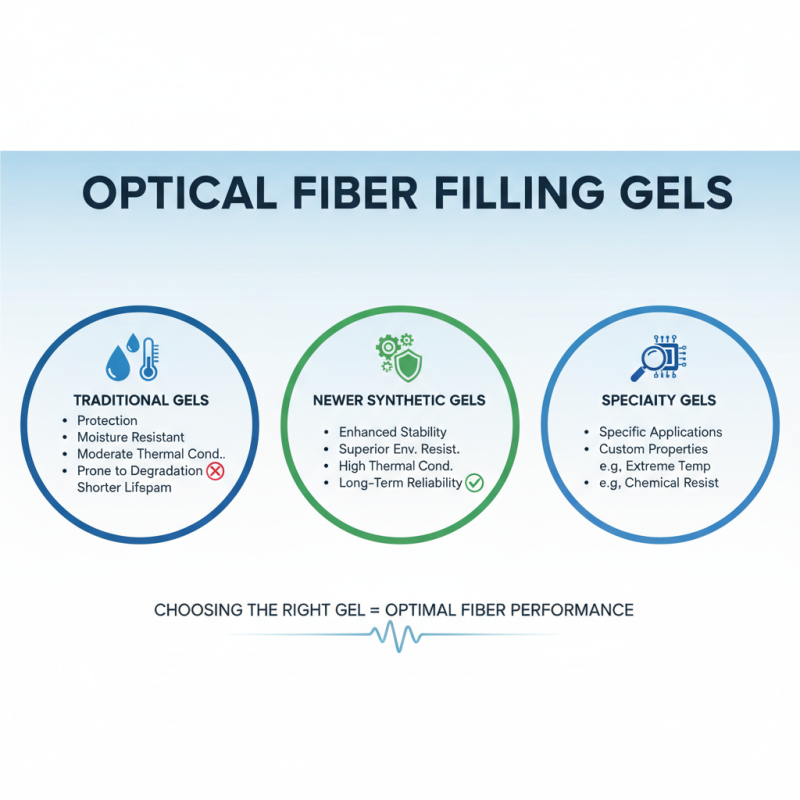
Optical fiber filling gels play a crucial role in the performance of fiber optic cables. Understanding their various types and properties helps in selecting the right material for different applications. Traditional gels are primarily used for protecting fibers from environmental factors. They offer decent thermal conductivity and moisture resistance. However, they can be prone to degradation over time, which raises questions about their long-term reliability.
In contrast, newer gel types incorporate advanced formulations, enhancing performance. Some use silicone-based compounds, known for flexibility and resilience. Others employ thermoplastic elastomers, which offer excellent mechanical properties. These options provide durability, but users must evaluate their compatibility with specific fiber types. Not all gels are universally suitable, making informed choices critical.
Color and viscosity also vary across gel types. A thicker gel may provide better protection but can complicate installation. Clarity is essential for inspection and monitoring purposes. Users may overlook these details, resulting in inefficiencies. Each application might require a different approach, and ideal choices are often not straightforward. Exploring these nuances leads to better outcomes in fiber optic installations.
Future Trends in Optical Fiber Filling Gel Technologies and Market Growth
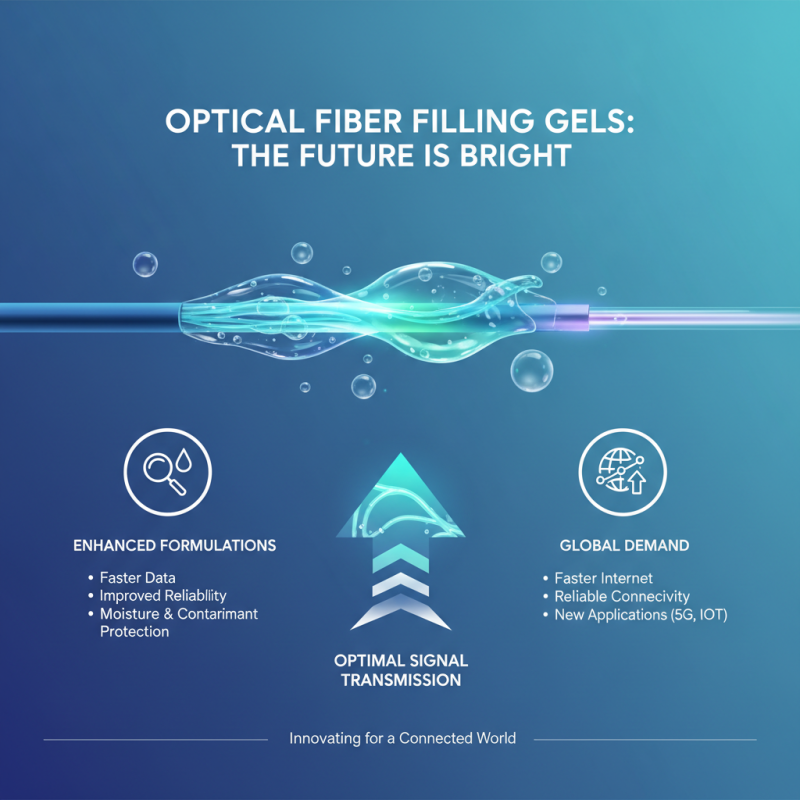
The future of optical fiber filling gel technologies looks promising. As demand for faster and more reliable internet grows, innovations in gel formulations are crucial. These gels play a vital role in enhancing the performance of fiber optic cables. They provide necessary protection against moisture and contaminants while ensuring optimal signal transmission.
One emerging trend is the development of environmentally friendly gels. Traditional gels often contain harmful chemicals. By shifting to bio-based materials, manufacturers can reduce environmental impact. This trend reflects a broader commitment to sustainability in technology. However, researchers face challenges in maintaining performance while focusing on eco-friendly options.
Market growth also hinges on advancements in production techniques. Innovative methods can lower costs and improve efficiency. Yet, companies must navigate quality control to ensure consistency. Striking a balance between cost-effectiveness and product integrity remains a hurdle. As the market evolves, these factors will shape the future of optical fiber filling gels.