Essential Tips for Choosing Optical Cable Filling Gel?
Choosing the right Optical Cable Filling Gel is critical for ensuring the longevity and performance of fiber optic cables. With the global demand for high-speed internet projected to grow by 25% annually, efficient cable protection solutions have never been more important. Industry reports highlight that inadequate filling materials can lead to cable degradation, costing companies billions in repairs and downtime.
Many manufacturers offer various gels, each with unique properties. Some are designed for extreme temperatures, while others provide enhanced moisture resistance. According to recent market analysis, choosing high-quality Optical Cable Filling Gel can improve system reliability by up to 40%. However, making a selection can be challenging due to the overwhelming number of options available.
Ultimately, the right gel must balance performance with cost. Not every product will suit every application, and some might even fall short of expectations. A thorough understanding of material specifications is essential for decision-making. Investing time in research can yield significant long-term benefits in network performance and maintenance costs.
Key Characteristics of Optical Cable Filling Gel: Industry Standards
Choosing the right optical cable filling gel is crucial for maintaining optimal performance and durability. Industry standards dictate that filling gels should provide excellent moisture resistance and thermal stability. According to a recent report by the Telecommunications Industry Association (TIA), nearly 70% of cable failures can be traced back to inadequate protection against environmental factors.
Key characteristics to look for include low viscosity and high thermal conductivity. These properties ensure uniform distribution within the cable. In fact, a study published in the Journal of Optical Communications indicates that gels with a viscosity of less than 5,000 centipoise are ideal for proper flow and placement. Moisture absorption is another essential factor; gels must absorb less than 1% of water over a six-month period to meet industry standards. This prevents weakening of the cable structure.
Furthermore, ensure the selected gel complies with applicable safety standards. Non-toxic ingredients are preferable, especially for installations in residential areas. Many gels don’t fully disclose their chemical compositions. Finding reliable data can prove challenging. Opt for manufacturers that provide clear information on their products, thereby contributing to informed decisions.
Understanding Different Types of Optical Cable Filling Gels and Their Properties
When selecting optical cable filling gels, it’s essential to understand the different types available. Each gel has unique properties that can significantly affect performance. For instance, water-blocking gels prevent moisture intrusion, which is crucial in outdoor installations. They are often used in harsh environments where humidity poses a threat. On the other hand, non-water-blocking gels provide excellent flexibility, beneficial for indoor applications.
Understanding the thermal properties of these gels is equally important. Some gels offer better thermal stability, making them suitable for higher temperature applications. Others might not perform well under extreme heat. It's vital to assess the environment where the cables will be deployed. Be cautious; not every gel fits every scenario. There could be trade-offs between flexibility and water resistance.
Each option has advantages and limitations. Choosing the wrong gel may lead to decreased performance or premature failure of the optical cable. Testing and feedback from experienced professionals can help identify the best gel for specific needs. Gaining insights from industry experts is also beneficial for making informed decisions. Reflecting on previous experiences can lead to better choices in the future.
Impact of Temperature and Environmental Conditions on Filling Gel Performance
When selecting optical cable filling gel, the impact of temperature and environmental conditions is vital. Studies show that gels perform best within a specific temperature range. Extreme temperatures can alter gel properties, affecting their ability to protect fibers from moisture and contaminants. A major industry report indicates that at temperatures above 60°C, the gel can expand, leading to pressure build-up that may compromise the cable integrity.
Furthermore, environmental factors play a crucial role. High humidity levels can affect the gel's viscous qualities, potentially resulting in a lack of adhesion to cable components. The gel's ability to remain effective in damp conditions is essential for long-term durability. Some professionals argue that while many gels are rated for various climates, the variations in real-world conditions can create unforeseen challenges. According to a survey, nearly 30% of cable failures were linked to inadequate gel performance under adverse conditions.
It's essential to consider how these factors can lead to inconsistent experiences. While technical specifications offer guidance, overlooking local environmental conditions may lead to subpar performance. Acknowledging these nuances can protect investments in optical cable installations. Such awareness allows for improved decision-making in selecting the right filling gel.
Comparative Analysis of Filling Gel Viscosity and Its Effect on Cable Performance
The viscosity of optical cable filling gel plays a crucial role in overall cable performance. Studies indicate that lower viscosity gels can enhance flowability, filling every nook and cranny within the cable structure. Proper fill prevents air pockets, which can lead to signal loss. A comparison of gel types shows that viscosity ranges between 500 to 2000 centipoise. Gels on the lower end facilitate easier application but may provide insufficient support.
On the other hand, higher viscosity gels offer better retention but might pose challenges during installation. For instance, a report from the Institute of Cable Engineering highlights that installations using various gel viscosities demonstrated a 15% variability in signal loss over lengthy deployments. This difference emphasizes the need for careful selection based on the specific application and environment.
Another key aspect is temperature stability. Optical cables often face varying temperatures during their lifespan. A gel that performs well at elevated temperatures may not be suitable in cooler conditions. Some gels show degradation or increased viscosity under stress. It becomes essential to consider long-term performance regarding climatic conditions. Balancing these factors is vital for ensuring optimal cable performance and longevity.
Impact of Filling Gel Viscosity on Optical Cable Performance
This chart illustrates the impact of filling gel viscosity on the performance index of optical cables. A low viscosity gel provides better performance, while high viscosity may hinder it. Aim for an optimal viscosity to ensure maximum cable performance.
Safety and Compliance Considerations in Optical Cable Filling Gel Selection
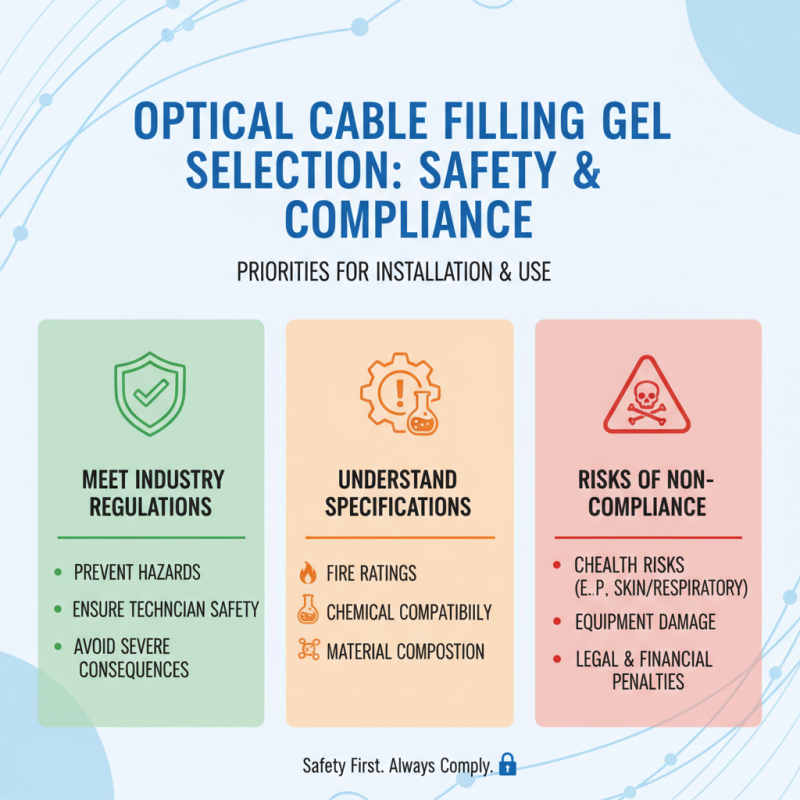
When selecting optical cable filling gel, safety and compliance should be top priorities. The gel must meet industry regulations to ensure it won’t pose hazards during installation or use. Inadequate compliance may lead to severe consequences. For example, improper materials can cause chemical reactions or health risks for technicians. Understanding the specifications like fire ratings and chemical compatibility is crucial.
Moreover, it’s essential to consider the environmental impact of the filling gel. Some gels can leach harmful substances, which is a major concern. Manufacturers should provide safety data sheets that detail these aspects. Make sure you have access to these documents before making a decision.
Finally, don't overlook the importance of real-world testing. Relying solely on theoretical data may lead to poor choices. Conduct hands-on evaluations in your specific environments. This process can unveil unexpected issues and reinforce compliance. Remember, a proactive approach in selecting the right gel is not just about performance; it’s about safety and long-term reliability.