
Leave Your Message

Top 10 Cable Materials Which One is Best for Your Needs?

Selecting the right cable material is crucial for any project. With various options available, it can be overwhelming. According to a recent industry report by MarketsandMarkets, the global cable materials market is expected to reach $22.5 billion by 2025. This growth is driven by advancements in technology and the increasing demand in sectors like telecommunications and renewable energy.

Different cable materials serve different purposes. For instance, copper remains the most reliable due to its exceptional conductivity. However, aluminum is lighter and cost-effective, making it a popular alternative. The choice ultimately depends on specific project requirements. A poor decision could lead to inefficiencies or failures.

It's essential to weigh benefits against drawbacks. Certain materials might pose environmental concerns. Even the best choice may not be the best for every situation. Understanding each cable material's properties is vital for making informed decisions. Taking the time to reflect on needs could save future headaches.

Top 10 Cable Materials Which One is Best for Your Needs?

Understanding Different Types of Cable Materials

Top 10 Cable Materials Which One is Best for Your Needs?

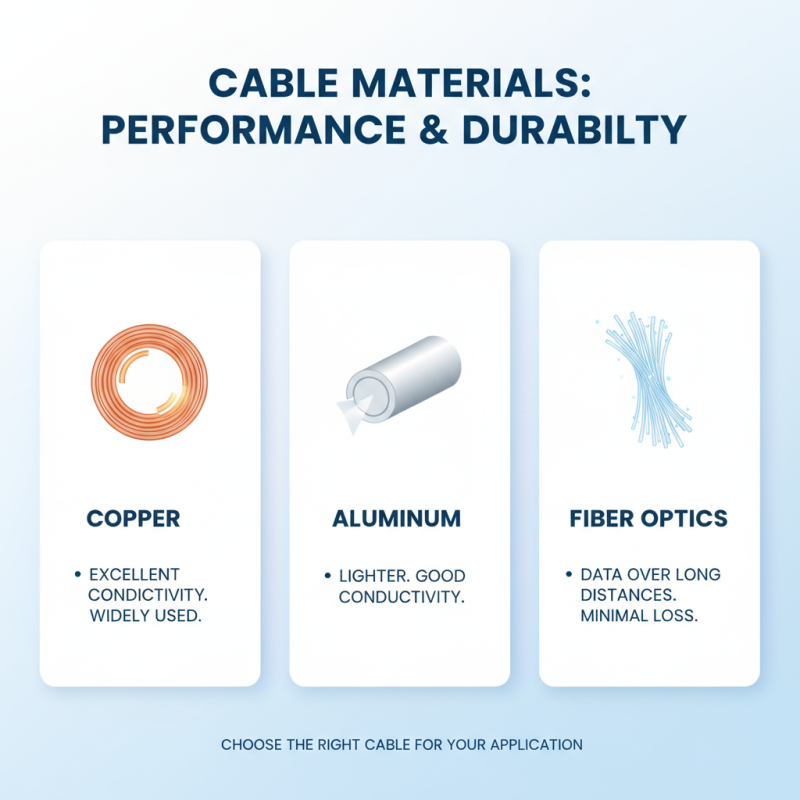
Cable materials play a crucial role in performance and durability. Different types are suited for various applications. Copper is widely used due to its excellent conductivity. Aluminum is a lighter alternative, though slightly less efficient. Then there are fiber optics. They excel in transmitting data over long distances with minimal loss.

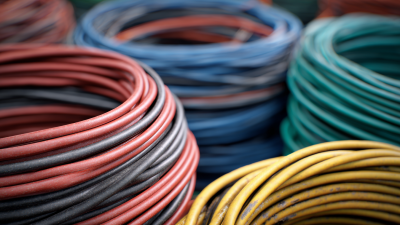
Other materials include PVC and rubber. These insulate and protect cables from damage. However, both can degrade over time. The choice of material impacts flexibility and strength. Many people overlook the climate effects on cables. Temperature changes can cause expansion or contraction, leading to possible failures.

Be mindful of your specific needs. The right choice can enhance performance. Yet, sometimes, the perfect cable material may be elusive. Simple criteria such as environment and usage offer guidance, though no single answer fits all. Each type has strengths and weaknesses. Reflect on these aspects before making a decision.
Key Properties to Consider When Choosing Cable Materials

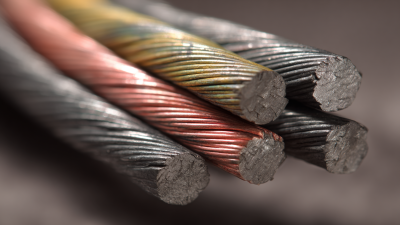
When selecting cable materials, key properties greatly influence performance. Conductivity, durability, and flexibility top the list. For instance, copper offers superior conductivity, with electrical resistance 1.68 micro-ohm meters. Aluminum is lighter but has lower conductivity, making it less ideal for some applications.

Temperature resistance is another vital consideration. Some materials can withstand extreme heat or cold. Polyethylene has a temperature range of -40°C to 90°C. In contrast, Teflon can function between -200°C and 260°C. This wide range makes it suitable for specialized applications, like aerospace.

Environmental factors also play a role. UV resistance is essential for outdoor cables. PVC can degrade under sunlight exposure, while certain thermoplastic elastomers can resist these effects better. Additionally, flexibility can be crucial in tight spaces or during installation. Materials like silicone provide excellent bendability, making them practical for various setups. Understanding these properties helps in making informed choices.

Comparison of Common Cable Materials: Pros and Cons

When it comes to cable materials, understanding their pros and cons is crucial. Copper and aluminum are commonly used. Copper is excellent for conductivity but can be pricey. Aluminum, on the other hand, offers a lightweight option but may not provide the same efficiency as copper.

Then there are fiber optic cables. They transmit data very quickly. However, they are more delicate and can be complex to install. PVC and rubber are popular for insulation. PVC is affordable, but it doesn’t fare well under extreme conditions. Rubber can withstand harsher environments but is heavier and more costly.

While these materials have their benefits, they also have drawbacks. For instance, poor installation can lead to inefficiencies, regardless of the material used. It’s vital to evaluate your specific needs, including durability and flexibility. Making the right choice isn’t always straightforward. Each option presents trade-offs that require thoughtful consideration.

Top 10 Cable Materials Comparison Table

Cable Material Pros Cons Best Use Cases
Copper Excellent conductivity, ductility Prone to corrosion and high cost Electrical wiring, telecommunications
Aluminum Lightweight, cost-effective Lower conductivity than copper Power transmission, overhead lines
Fiber Optic High-speed data transmission, immune to EMI Fragile, more expensive to install Internet, telecommunications
PVC (Polyvinyl Chloride) Cost-effective, durable Limited temperature range Home wiring, general-purpose cables
XLPE (Cross-Linked Polyethylene) High thermal resistance, excellent dielectric properties Higher cost than standard PVC Low-voltage power cables, industrial applications
TPU (Thermoplastic Polyurethane) High flexibility, abrasion resistance Can be more expensive than PVC Flexible cables, robotics
Silicone Excellent heat resistance, flexibility Higher cost, less mechanical strength High-temperature environments, medical devices
Rubber Good flexibility, weather-resistant Can degrade over time, price variability Outdoor wiring, electric vehicles
RVS (Rubber Vinyl Sheathed) Good flexibility and resistance to various conditions Weight can be an issue General-purpose and portable applications
Steel High strength, durability Heavy, prone to corrosion Armored cables, industrial settings

Application Suitability of Various Cable Types

Choosing the right cable material depends on specific applications. Each type of cable has its unique strengths and weaknesses. For instance, copper cables are excellent for conducting electricity but may not perform well in environments with high moisture. On the other hand, fiber optic cables are perfect for high-speed data transmission but may be more fragile than their copper counterparts.

Tips: Always assess the environment where the cable will be used. Consider factors like temperature, exposure to chemicals, and physical stress. These environmental aspects can greatly influence the performance and longevity of the cable.

Another point to ponder is the cost-effectiveness of various materials. While lightweight materials may save initial costs, they might require more frequent replacements. Choose materials that offer a balance between durability and affordability. Reflect on your long-term needs. The best cable might not always be the cheapest option upfront.

Finally, it’s important to think about future upgrades. Some cables become obsolete faster than others. Investing in higher-quality cables can be wise if you plan to expand or upgrade your systems soon.

Top 10 Cable Materials - Application Suitability

Best Practices for Selecting the Right Cable Material for Your Needs

Choosing the right cable material can be daunting. Many options exist, each with unique properties. Understand your needs before diving in. For high-temperature environments, materials like silicone rubber are ideal. They endure heat well but can be expensive. Are they worth it for your project?

For everyday applications, PVC might suffice. It offers good flexibility and is cost-effective. However, it doesn’t perform as well in extreme conditions. Consider the environment. A less durable option might lead to issues. Are you prepared to face potential failures? Reflect on your requirements before deciding.

Conduct thorough research on your chosen materials. Testing a small sample can help identify their suitability. Seek advice from experts if needed. There’s no one-size-fits-all. Each situation is unique. The right choice ensures efficiency and longevity in your project.