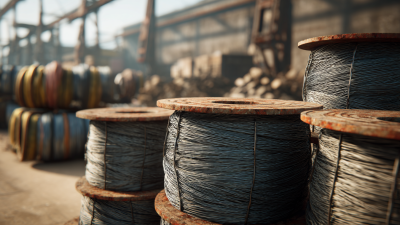
In 2026, global cable buyers face tighter performance, safety, and supply-chain expectations. PVC Cable Material remains widely used for building wires, control cables, and industrial assemblies. Its advantages include flexible processing, practical cost, and dependable insulation when properly formulated. A smooth jacket helps, but appearance proves little. The real evidence is inside the specification.
Experienced buyers examine polymer grade, plasticizer stability, thermal limits, voltage rating, and flame behavior. They also check whether the material suits indoor, outdoor, humid, or mechanically demanding installations. A datasheet should identify test methods, batch details, and recommended processing conditions. Independent laboratory reports add confidence. Supplier audits matter too. Reliable records can reveal whether production remains consistent from one shipment to the next.
The best choice is not always the cheapest compound or the most flexible one. A soft formulation may process easily, yet it can perform poorly under heat or long-term stress. A harder grade may improve durability, but increase installation difficulty. These trade-offs deserve careful review. Destination markets may also reference different IEC, UL, EN, or national requirements, so buyers should confirm the applicable certification route before ordering. Requirements change. Assumptions age quickly.
This guide evaluates 2026 PVC Cable Material options through practical purchasing criteria, technical evidence, and supplier reliability. It considers performance in real cable production, not only laboratory claims. Readers will find questions worth asking, warning signs worth checking, and details that can prevent costly rework. Some recommendations remain conditional. That is intentional. Material selection depends on the cable design, operating environment, and verified compliance evidence.
2026 Best PVC Cable Material for Global Buyers
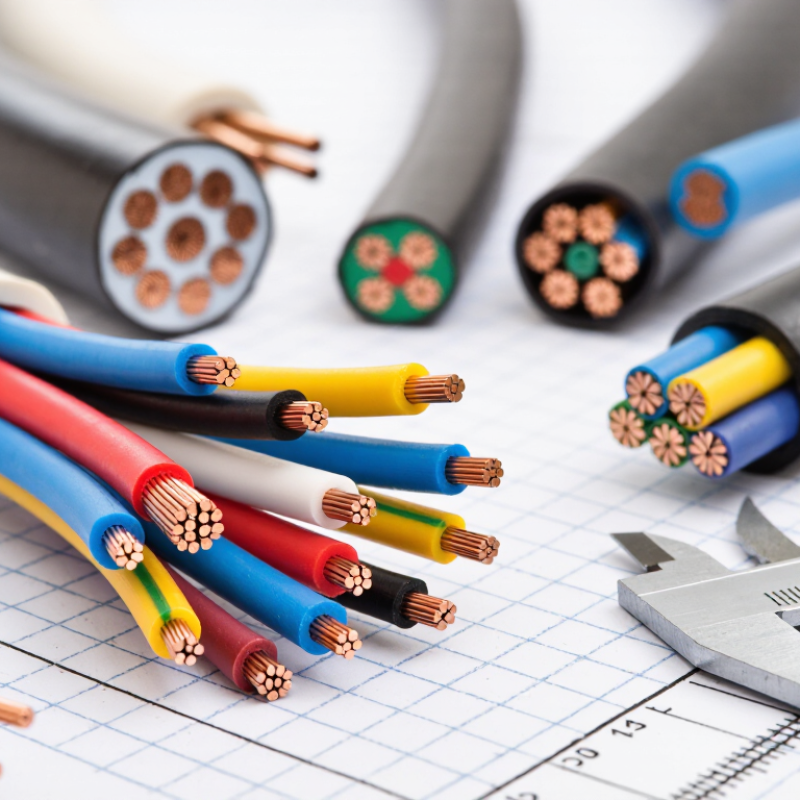
PVC cable material contains about 57% chlorine by mass in its basic polymer structure. This high chlorine content helps reduce flammability compared with many hydrocarbon-based plastics. It also supports good electrical insulation and reasonable resistance to moisture, abrasion, and common chemicals. These properties explain PVC’s wide use in building wires, appliance cords, control cables, and low-voltage power systems.
The material is practical, but not perfect. A cable compound may include plasticizers, stabilizers, pigments, and flame-retardant additives. Each ingredient changes flexibility, temperature performance, smoke behavior, and processing results. During factory inspections, buyers should check insulation thickness, tensile strength, elongation, aging performance, and conductor adhesion. Small defects can appear around the cable surface.
Surface quality matters.
PVC performs well in many indoor and general-purpose applications. However, continuous high heat, severe ultraviolet exposure, or demanding oil environments may require another insulation system. Global buyers should request test reports for the target market, because fire, smoke, electrical, and environmental requirements differ by country. The 57% chlorine figure is a useful starting point, not a complete purchasing specification. Compound quality, formulation control, and verified production consistency deserve equal attention. I have seen low-cost materials pass visual inspection but fail after heat aging, which is easy to overlook.
2026 Best PVC Cable Material for Global Buyers
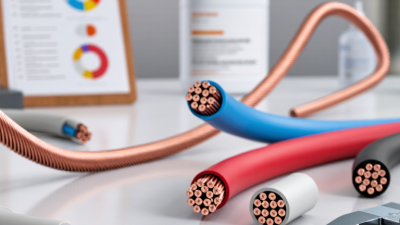
For global buyers, PVC cable selection should begin with measurable performance, not color or surface gloss. A 70°C insulation rating indicates the maximum continuous conductor operating temperature under specified conditions. It does not mean every installation can run safely at 70°C. Ambient heat, grouping, conductor size, and ventilation can change actual performance. In warehouse inspections, I check the temperature rating against the cable schedule and installation route. Small mismatch.
IEC 60332-1-2 evaluates vertical flame propagation on a single insulated cable or wire. During testing, a specified flame is applied for a defined period, then damage length and burning behavior are assessed. Passing this test supports limited flame spread performance. It does not certify smoke toxicity, circuit integrity, or fire performance in cable bundles. Buyers should request the test report, cable construction, conductor resistance, and production batch traceability. A certificate without a matching product description deserves caution.
Good PVC compound control affects flexibility, insulation resistance, aging, and processing consistency. Ask whether the 70°C rating is supported by thermal aging data, not only a datasheet line. Check markings, outer diameter, tensile results, and insulation thickness during incoming inspection. These details reveal process variation. The practical weakness is often documentation. Suppliers may quote IEC testing while omitting sample conditioning or report scope. That gap should trigger clarification before approval, not automatic rejection.
2026 Best PVC Cable Material for Global Buyers
PVC remains a practical cable material because it balances cost, flexibility, and processing efficiency. PlasticsEurope’s Plastics—the Fast Facts 2024 reports PVC at roughly 10% of European plastics demand in 2023. That scale supports stable supply, but grade selection still requires technical judgment.
Flexible PVC suits building wires, appliance cords, and tight bends. Plasticizers keep the insulation soft, while typical temperature ratings remain near 70°C. Heat-resistant PVC can reach 90°C or 105°C, depending on formulation and aging performance. However, higher temperature ratings do not automatically increase allowable current. Conductor size, installation method, and ambient temperature still control cable safety. Details matter.
Low-smoke PVC formulations can reduce smoke during fire testing, but they are not automatically halogen-free. IEC 61034-2 evaluates smoke density using light transmittance, with 60% commonly used as a benchmark in applicable cable tests. IEC 60754 evaluates acidic gases released during combustion. Buyers should request test reports, aging data, cold-bend results, and batch traceability. A clean datasheet is not enough. In my experience, procurement teams sometimes compare only hardness and tensile strength. That is a mistake. Smoke behavior, plasticizer migration, and long-term flexibility may matter more in real installations.
2026 PVC cable selection starts with documented compliance, not color or low price. RoHS restricts lead, mercury, cadmium, hexavalent chromium, PBBs, PBDEs, and four phthalates. Most restricted substances have a 0.1% maximum limit; cadmium is limited to 0.01%. The European Commission’s RoHS evaluation found strong progress in reducing hazardous materials, but enforcement gaps remain. A supplier declaration alone is not proof.
REACH requires deeper chemical visibility. ECHA’s 2024 chemicals reporting identified more than 240 substances of very high concern on its Candidate List. PVC compound suppliers should provide updated substance declarations, not old certificates. Ask for batch traceability, plasticizer details, and laboratory test dates. Small omissions matter.
For electrical performance, IEC 60227 covers PVC-insulated cables rated up to 450/750 V. Check conductor resistance, insulation thickness, voltage marking, and ageing results. UL requirements depend on the product category; UL 83 commonly applies to thermoplastic-insulated building wire. Buyers should match the exact cable construction to the applicable UL file and test method. Certificates can be genuine yet unsuitable for a different voltage or installation environment. Factory audits should compare the approved formulation with production samples. This step is often skipped. That is risky. Industry testing reports also show recurring failures from inconsistent insulation thickness and unverified flame-retardant additives. A practical checklist should include RoHS test reports, REACH declarations, UL evidence, IEC test records, and retention samples from every production batch.
| Evaluation Dimension | Buyer Requirement | Reference Limit or Technical Detail | Recommended Evidence | Status for Global Purchasing |
|---|---|---|---|---|
| Cable application | Select PVC compound according to voltage, installation environment, flexibility, and temperature requirements. | IEC 60227 covers PVC-insulated cables with rated voltages up to and including 450/750 V. | Cable construction sheet, rated-voltage declaration, application specification, and applicable test reports. | Define before quotation |
| RoHS restricted substances | Homogeneous materials in the cable should comply with the applicable EU RoHS requirements. | Maximum concentration by weight in homogeneous material: 0.1% for lead, mercury, hexavalent chromium, PBB, PBDE, DEHP, BBP, DBP, and DIBP; 0.01% for cadmium. | Supplier declaration, material BOM, controlled-substance statement, and laboratory screening or test report where required. | Mandatory check for EU/EEA products in scope |
| RoHS exemptions | Do not claim unrestricted compliance solely because an exemption may apply. | Exemptions are product- and application-specific, time-limited, and listed under the applicable RoHS exemption framework. | Identify the exact exemption number, scope, expiry status, and technical justification if used. | Review case by case |
| REACH SVHC control | Assess the PVC insulation, sheath, additives, pigments, and other supplied articles for substances of very high concern. | If an article contains an SVHC above 0.1% by weight, information duties may apply; the candidate list is updated by the European Chemicals Agency. | Current SVHC declaration, full-material disclosure, supplier change-control statement, and SCIP assessment where applicable. | Check against the current candidate list |
| Phthalate management | Control plasticizers used in flexible PVC, particularly for cables used in electrical and consumer products. | DEHP, BBP, DBP, and DIBP are each subject to a 0.1% RoHS homogeneous-material limit; REACH restrictions may also apply to certain articles and uses. | Plasticizer identity, formulation control, batch traceability, and targeted chemical test report. | High-priority material check |
| UL product standard | Use the UL standard that matches the finished wire or cable construction and intended market. | UL 83 is used for thermoplastic-insulated wires and cables; additional standards may apply depending on cable type, installation, and end use. | Applicable certification record, construction details, flame rating, temperature rating, voltage rating, and marking requirements. | Confirm the exact cable category |
| UL flame and temperature performance | Specify the required flame behavior and conductor operating temperature rather than using a generic “UL PVC” description. | Performance depends on the complete cable construction, compound formulation, thickness, and applicable UL type; common PVC insulation ratings are not interchangeable. | Finished-cable test report, recognized construction record, and production inspection plan. | Verify finished product, not resin alone |
| IEC 60227 construction | Match conductor class, insulation, sheath, cores, marking, and cable type to the selected IEC 60227 part. | IEC 60227 is a series covering specific PVC-insulated cable types, including fixed-wiring and flexible-cable constructions. | Applicable-part declaration, dimensional report, electrical test results, and routine production-test records. | Select the exact IEC 60227 part |
| Electrical properties | Require stable insulation resistance, dielectric strength, and conductor resistance throughout production. | Limits depend on the applicable product standard, conductor size, rated voltage, temperature, and cable construction. | Routine test records, type-test report, conductor-resistance data, voltage test data, and insulation-resistance results. | Required for technical approval |
| Mechanical and thermal performance | Choose the compound according to flexibility, abrasion resistance, bending frequency, ambient temperature, and installation stress. | PVC formulations vary significantly; a higher plasticizer level may improve flexibility but can affect hardness, migration, aging, and chemical resistance. | Tensile and elongation results before and after aging, low-temperature test where applicable, and heat-shock or thermal-aging data. | Specify by application |
| Material traceability | Maintain traceability from PVC compound and additives through extrusion, testing, packaging, and shipment. | A controlled formulation and documented change-notification process reduce compliance and performance risk. | Batch numbers, incoming-material records, formulation revision history, certificates of analysis, and retention samples. | Recommended for every export order |
| Market documentation | Prepare documentation for the destination market and avoid treating one standard as universal approval. | RoHS, REACH, UL, and IEC 60227 address different legal, chemical, construction, or safety requirements; one document does not automatically replace another. | Technical datasheet, declaration of conformity where applicable, compliance declarations, test reports, drawings, labels, and packaging specifications. | Complete before mass production |
Note: Regulatory thresholds and standard editions can change. Confirm the applicable legal requirements, certification scope, and latest edition with the destination-market authority or an accredited testing organization before placing a production order.
For global buyers, PVC cable material should be judged beyond its price per kilogram. In real sourcing work, the lowest quotation often hides higher scrap, freight, or replacement costs. Compare total landed cost, including processing stability and installation labor. Request a sample from the actual production lot. Then check insulation thickness, surface smoothness, and flexibility after bending.
Recyclability deserves practical attention. PVC compounds may include different plasticizers, stabilizers, pigments, and flame-retardant additives. These mixtures can make recycling more difficult. Ask whether production scrap is separated and reused under controlled conditions. Also request material composition data and a clear recycling statement. It is not enough to print “recyclable” on a document. That claim needs evidence.
Flame rating must match the cable’s application and test method. Review independent laboratory reports, not only supplier declarations. Check vertical burning results, smoke behavior, and whether the rating applies to the finished cable. Service life depends on temperature, sunlight, moisture, oil, and repeated movement. A material rated for ordinary indoor wiring may age quickly beside a hot machine. Select the required temperature class with a safety margin. Still, over-specification can waste money. I have seen buyers choose stronger compounds without confirming actual conditions. That decision sounds safe, but it may increase cost and complicate recycling. Keep batch records, inspect incoming material, and test performance periodically. Small checks prevent expensive surprises.