Leave Your Message

7 Tips for Choosing PVC Coaxial Cable Material?

Choosing the right Pvc Coaxial Cable Material affects signal stability, outdoor life, and installation safety. The outer jacket may look simple, yet its PVC formulation controls flexibility, abrasion resistance, and resistance to moisture. A cable used behind a television has different demands from one installed through a warm wall or exposed to sunlight. Small details matter.

In this guide, we examine seven practical tips for evaluating Pvc Coaxial Cable Material before purchase. The discussion considers jacket thickness, temperature range, flame behavior, bending performance, and compatibility with connectors. It also explains why copper quality, shielding structure, and dielectric design should be reviewed together. A flexible jacket can simplify routing, but excessive softness may reduce mechanical protection. That trade-off deserves attention.

Look beyond the label.

Experienced installers often inspect the cable surface, bend it gently, and check whether the printed specifications match the project conditions. Reliable manufacturers should provide test data, production details, and clear compliance information from recognized laboratories or standards bodies. However, printed claims are not enough. Independent verification may still be necessary for demanding installations.

This article does not treat one material as perfect for every application. That would be misleading. PVC performance can vary with additives, manufacturing quality, and environmental exposure. A cable that performs well indoors may age faster outdoors. Careful selection requires comparing real operating conditions with documented evidence. By applying these seven tips, buyers can reduce replacement risk and choose a coaxial cable material with greater confidence.
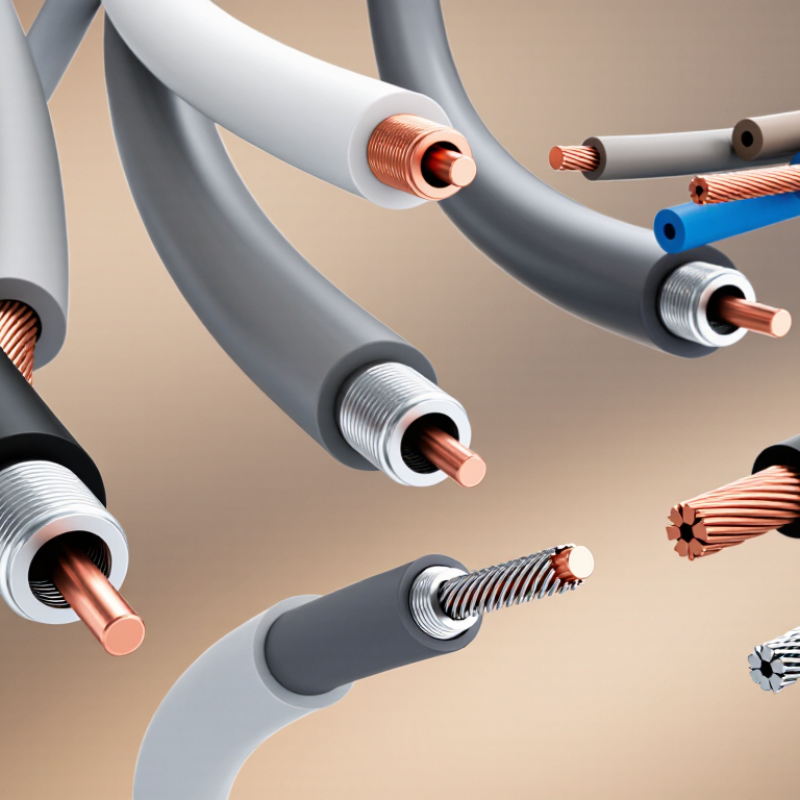
7 Tips for Choosing PVC Coaxial Cable Material?

PVC Coaxial Cable Fundamentals: 50–75 Ω Impedance and Frequency Matching

PVC coaxial cable selection starts with impedance, not color or jacket thickness. A 50 Ω cable commonly serves radio, wireless, and test equipment. A 75 Ω cable is typical for video and broadband signals. The difference is structural. Conductor diameter, dielectric spacing, and PVC’s relative permittivity all influence impedance.

A mismatch creates measurable loss. Connecting a 50 Ω source to a 75 Ω load produces a reflection coefficient of 0.20 and a VSWR of 1.5:1. That may seem modest, but repeated mismatches can weaken high-frequency signals.

IEC 61196-1:2021 identifies characteristic impedance, attenuation, return loss, and screening effectiveness as key cable performance checks. Match the cable, connector, and equipment rating.

Frequency matters just as much. A PVC cable rated for 100 MHz may perform poorly at 1 GHz. Review attenuation in dB per 100 meters at the actual operating frequency. PVC also changes slightly with temperature, bending, and manufacturing variation.

In practical testing, measure return loss after installation, not only from the factory datasheet. A short cable can still fail. I have seen installers focus on length and overlook connector geometry. That mistake is easy to repeat. Use a controlled impedance design, verify the datasheet test method, and leave room for real-world tolerance.
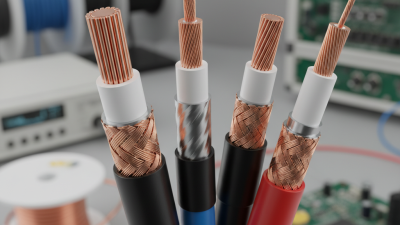
PVC Insulation Selection: 70°C Rating, Dielectric Constant, and Signal Loss

When choosing PVC for coaxial cable, start with the 70°C temperature rating. It describes the maximum recommended conductor operating temperature, not the surrounding air temperature. A cable in a warm cabinet may approach this limit quickly. Check ventilation, current loading, and installation spacing before accepting the rating.

Dielectric constant deserves equal attention. PVC’s dielectric constant affects capacitance, impedance, and signal velocity. Small changes can increase mismatch and return loss. For 50-ohm or 75-ohm systems, ask for controlled dielectric data across the working frequency range. Do not rely on one typical value. It may hide production variation. I have seen cables pass basic continuity checks while showing unexpected attenuation at higher frequencies.

Signal loss also depends on conductor size, shield structure, cable length, and temperature. A low-loss result at one frequency does not guarantee good performance elsewhere. Compare attenuation values in decibels per meter, then inspect the test conditions. Use a sample when possible. Bend it repeatedly, measure it again, and watch for changes. PVC can be practical and flexible, but plasticizer changes may affect aging and cold-weather handling. I sometimes focus too heavily on the 70°C label. That is a mistake. The better choice balances thermal margin, dielectric stability, mechanical needs, and verified test results.

Jacket Compliance Checks: UL 1581, RoHS, and Flame-Retardant Requirements

When choosing PVC coaxial cable material, inspect the jacket before comparing prices. A smooth surface should show consistent color, thickness, and flexibility. Ask for the exact PVC formulation and production batch records. The jacket protects shielding from moisture, abrasion, and repeated bending. Small cracks can expose larger quality problems later.

Check whether test documents reference UL 1581 and match the intended cable construction. UL 1581 covers test methods for wires and cables, including flame performance. Do not treat a test report as universal approval. Confirm the cable size, insulation design, and jacket material match the report. Paperwork is not proof. Review recent laboratory results when possible.

RoHS checks should identify restricted substances in the jacket, pigments, and plastic additives. Request a material declaration, supplier controls, and supporting test data. Flame-retardant claims also need careful wording. PVC may resist ignition, but performance depends on formulation, thickness, and installation conditions. A vertical flame test may not represent a crowded cable tray. Check the required rating for the final application and local installation rules. I have seen clean-looking jackets fail after tight bending, so visual inspection should include a simple flex test. Even careful reviews can miss one weak batch.

7 Tips for Choosing PVC Coaxial Cable Material? - Jacket Compliance Checks: UL 1581, RoHS, and Flame-Retardant Requirements

Tip Material or Compliance Dimension Practical Data or Requirement Why It Matters Recommended Verification
1 Confirm the PVC jacket grade Specify flexible or semi-flexible PVC according to the installation. Typical jacket hardness may range from approximately 70A to 90A Shore A, depending on plasticizer and filler content. The jacket must protect the braid, dielectric, and center conductor without becoming excessively stiff or prone to cracking. Request the technical data sheet, Shore hardness result, visual inspection criteria, and low-temperature flexibility data for the intended application.
2 Check UL 1581 applicability UL 1581 is a reference standard covering electrical wires, cables, and flexible cords. The applicable cable construction and test method must be identified; a general reference to “UL 1581 PVC” is not sufficient by itself. Different constructions, insulation systems, conductor sizes, and intended uses can require different evaluations and test conditions. Verify the exact cable designation, construction, temperature rating, voltage rating, and applicable UL test references in the product documentation.
3 Evaluate vertical flame performance Where a VW-1-type performance is required, confirm that the complete cable construction—not only the raw PVC compound—has been evaluated under the applicable test procedure. Flame performance depends on jacket thickness, pigment, plasticizer, filler, conductor arrangement, shielding, and the complete cable design. Request a test report or certification record that identifies the tested cable construction, sample size, test method, and result. Do not rely only on a compound supplier declaration.
4 Review RoHS substance limits For homogeneous materials, the commonly applied RoHS maximum concentrations are 0.1% by weight for lead, mercury, hexavalent chromium, PBB, PBDE, and the four regulated phthalates; cadmium is limited to 0.01% by weight. Restricted substances may occur in PVC stabilizers, pigments, plasticizers, coatings, or metal-plating systems. Obtain a current RoHS declaration covering the jacket, insulation, shielding, terminals, and other homogeneous materials. Use laboratory screening when supply-chain evidence is incomplete.
5 Control plasticizers and stabilizers Use a documented PVC formulation with suitable plasticizer compatibility, heat stabilizers, and pigment systems. Avoid assuming that “halogen-free” or “lead-free” automatically means RoHS compliant. The formulation affects flexibility, migration, aging, insulation resistance, surface tack, and flame behavior. Check the restricted-substance declaration, material change-control process, batch traceability, and accelerated-aging results.
6 Match temperature and environmental resistance Select a stated operating temperature range suitable for the installation. PVC jackets may require additional evaluation for sunlight, oil, moisture, abrasion, flexing, or low-temperature exposure. Heat, ultraviolet exposure, chemicals, and repeated bending can accelerate jacket embrittlement, swelling, cracking, or loss of insulation performance. Compare the declared temperature rating with the actual environment and request relevant aging, oil-resistance, UV-resistance, flexing, or cold-bend test results.
7 Verify dimensions and production consistency Control jacket outside diameter, concentricity, wall thickness, color, surface finish, and marking. A practical production specification should define nominal values and allowable tolerances. Inconsistent jacket dimensions can affect impedance, attenuation, connector fit, bending behavior, and mechanical protection. Use calibrated dimensional gauges, cross-section inspection, spark testing where applicable, and periodic electrical tests such as characteristic impedance and insulation resistance.
Important: Compliance depends on the complete coaxial cable construction, the applicable end-use requirements, and the current edition of the relevant standard or regulation. Always verify the latest documentation and test scope before approval.

Mechanical Performance: Tensile Strength, Flex Cycles, and Bend Radius

When choosing PVC coaxial cable, mechanical performance deserves close attention. A cable may transmit signals well but fail during installation. Check tensile strength for the complete cable, not only the copper conductor. A strong jacket should resist pulling, crushing, and abrasion near connectors. However, higher tensile strength does not always mean better flexibility.

Ask for test data from controlled production samples. It matters.

Flex-cycle testing shows how the cable behaves during repeated movement. Compare the stated cycle count with your real application. A robotic arm may bend thousands of times daily, while a fixed security camera may move rarely. Test conditions matter, including temperature, speed, tension, and bend direction. Results without these details can be misleading.

Bend radius is equally important. Static bend radius applies when the cable remains in one position. Dynamic bend radius applies when it moves repeatedly. Never force a cable around a sharp cabinet corner. That mistake can deform the dielectric and change impedance. Measure the installation path, including connector entry points. Leave gentle curves instead of tight loops. Field inspections often reveal that installers follow the minimum radius too closely. I have seen a cable pass an initial signal check, then develop intermittent loss after repeated movement. The specification was acceptable; the installation was not. Review tensile strength, flex cycles, and bend radius together, because one strong property cannot compensate for a serious weakness in another.

Quality Verification: Shielding Effectiveness, Dimensions, and Batch Certificates

When choosing PVC coaxial cable material, I verify the finished cable, not only the resin description. PVC hardness, temperature rating, and flexibility affect long-term handling. However, shielding effectiveness often reveals quality problems sooner. I request test data across the cable’s working frequency range. A single impressive value is not enough. I also inspect the braid or foil coverage under magnification. Gaps, uneven braiding, or loose layers can increase signal leakage and interference. Small defects matter.

Dimensions need equal attention. I measure conductor diameter, insulation thickness, shield coverage, and outer diameter from several samples. Calipers help, but they cannot replace a proper cross-sectional inspection. The cable should fit connectors without excessive force or looseness. I compare measured results with the approved drawing and tolerance limits. This step is easy to skip. That is a mistake. In one practical inspection, a slightly thin dielectric changed the cable’s impedance more than expected.

Batch certificates add traceability. Each certificate should identify the production lot, PVC compound reference, test dates, and measured values. I check whether the document matches the labels on the packaging and cable reels. Certificates should include relevant mechanical, electrical, and environmental results, not vague statements such as “passed inspection.” Independent laboratory verification is stronger when performance is critical. Still, documents can contain errors. I record samples, photographs, and test conditions before approving a batch. Good evidence supports sound decisions.

PVC Coaxial Cable Material Verification

This representative incoming-inspection chart compares shielding effectiveness, outer-diameter compliance, and batch-certificate completeness across four production lots. Shielding effectiveness is measured in dB, while the other indicators are shown as percentages. Acceptance limits should always be checked against the cable drawing, applicable specification, and purchase requirements.