Leave Your Message

China Top 10 LSZH Optical Cable Material Suppliers

Choosing a supplier for Lszh Optical Cable Material takes more than comparing prices. The compound must run reliably through extrusion and meet the cable’s performance needs. A stable melt flow can support smoother production, while consistent tensile strength and elongation help protect the finished sheath. Smoke density, halogen content, and flame performance also deserve careful review. Details matter.

This guide introduces ten Chinese suppliers and the factors buyers can use to assess them. It considers product range, technical documentation, manufacturing experience, quality controls, and support for sample testing. A useful supplier should explain its material grades clearly and provide current test data for the specific compound under consideration. Ask how batches are tracked, how processing conditions are recommended, and whether samples can be evaluated on your own equipment.

Supplier rankings are not a substitute for technical qualification. Performance may vary with cable design, extrusion settings, and the test method used. A promising datasheet is only a starting point. Compare evidence, request clarification where specifications are unclear, and confirm that the material suits the intended application. Some details may be difficult to compare directly, so buyers should avoid treating a simple ranking as a final verdict. This overview is designed to make that first evaluation more focused and practical.

China Top 10 LSZH Optical Cable Material Suppliers

What LSZH Means in Optical Cable Materials

LSZH means low smoke zero halogen. In optical cables, the term describes materials used for insulation or outer jackets. When exposed to fire, these compounds are designed to release less smoke and fewer corrosive halogen-acid gases than conventional halogenated materials. They do not make a cable fireproof. That distinction matters in crowded indoor routes, where smoke can quickly obscure labels and escape paths.

The IEC provides measurable tests behind these claims. IEC 60754-1 assesses halogen-acid gas content, while IEC 60754-2 measures gas acidity and conductivity. IEC 61034-2 evaluates smoke density; a commonly specified benchmark is at least 60% light transmittance under the test conditions. These figures describe controlled laboratory results, not a guarantee of visibility in every real fire.

For buyers, check the exact compound and the cable’s test certificates, rather than relying on “LSZH” alone. A jacket may meet smoke criteria but still differ in flexibility, abrasion resistance, or performance after aging. That trade-off is easy to overlook. “Zero halogen” is also a practical classification, not proof that every sample contains absolutely no halogen. Test methods and requirements can vary by specification.
Key Material Types and Their Performance

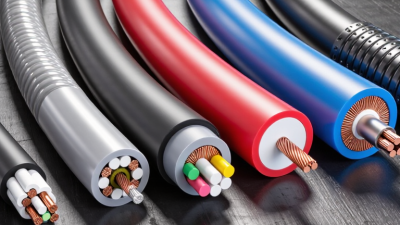
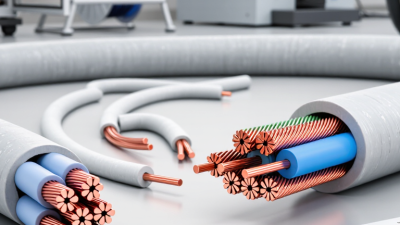
LSZH cable compounds usually combine a polyolefin base, such as EVA or polyethylene, with mineral flame retardants. Aluminium trihydrate releases water when heated, helping cool the material; magnesium hydroxide generally activates at higher temperatures. The balance matters: more filler can improve flame performance but may reduce flexibility and make extrusion harder. A cable that feels stiff at room temperature may also be harder to install around tight bends.

Performance should be checked through test results, not material labels alone. IEC 60754 evaluates gases released during combustion, while IEC 61034-2 measures smoke density. Many cable specifications set a minimum light transmittance of 60% in the smoke test, though acceptance criteria vary by application. IEC 60332 assesses flame spread. These tests address different hazards, so one passing result cannot stand in for the others. No compound is perfect; processing quality can shift results.

Tips: Ask suppliers for test reports covering the finished cable, not only raw pellets. Compare ageing, tensile strength, and elongation data alongside fire-test results. A small batch trial can reveal cracking or surface roughness before production scales up.

China Top 10 LSZH Optical Cable Material Suppliers - Key Material Types and Their Performance

Supplier-neutral material reference: The chart compares indicative ingredient loading ranges in LSZH compounds, not supplier rankings or proprietary formulations. Actual formulations vary by cable design; ATH and MDH may be used as alternatives or in blends, so the ranges should not be added together.

High mineral flame-retardant loading helps reduce smoke and halogen emissions. EVA/PE forms the polymer matrix, while coupling agents and processing additives support filler dispersion and manufacture. Values are indicative formulation ranges, not universal specifications.

How LSZH Cable Materials Are Made and Tested

LSZH cable compounds begin with a polymer base and carefully selected mineral fillers, commonly aluminum or magnesium hydroxide. These fillers help reduce flame spread and smoke, while also affecting flexibility and processing. Stabilizers, pigments, and processing aids may be added in measured amounts. Small changes matter.

The ingredients are weighed, mixed, and fed into an extruder. Heat and rotating screws disperse the fillers through the polymer. The molten compound passes through a die, cools, and is cut into pellets. Operators check pellet color, size, and surface consistency. A clean-looking pellet is useful, but it does not prove the material will perform well inside a cable.

Testing examines both mechanical and fire-related properties. Tensile strength and elongation tests show how the insulation behaves when pulled, while heat aging checks whether those properties remain stable over time. Flame tests, smoke measurements, and assessments of acidic gases provide further evidence. Exact procedures and limits depend on the cable specification and applicable test method. A neat laboratory result can still mislead if samples were poorly prepared or test conditions were not recorded. That part deserves more attention than it often gets. Reliable suppliers keep batch records, retain samples, and investigate unexpected variation before material reaches cable production.

China Top 10 LSZH Optical Cable Material Suppliers - How LSZH Cable Materials Are Made and Tested

No. Material or Production Area Typical Role in an Optical Cable Key Manufacturing or Quality Controls Relevant Tests or Standards
1 Polymer base resin, such as EVA or polyethylene blends Forms the continuous polymer phase in many LSZH cable compounds and helps determine flexibility, processability, and mechanical performance. Check resin identification, melt flow rate, density, moisture, and batch consistency before compounding. Melt flow rate: ISO 1133-1; density: ISO 1183-1. Cable-material mechanical testing is covered by applicable parts of the IEC 60811 series.
2 Aluminium trihydrate (ATH) A mineral flame-retardant filler. It releases water when heated and can help reduce heat and flame spread in suitable formulations. Control particle size, moisture, surface treatment, dispersion, and filler loading; poor dispersion can affect extrusion and mechanical properties. Verify incoming filler specifications and assess finished compounds using the flame, smoke, and gas tests required by the cable specification.
3 Magnesium hydroxide (MDH) Another mineral flame-retardant filler, often selected where processing temperatures and formulation requirements suit its use. Monitor purity, particle characteristics, moisture, surface treatment, and dispersion during mixing. Finished-cable flame testing may use IEC 60332-1-2 or, for applicable bundled-cable categories, IEC 60332-3 series methods.
4 Polymer compatibilizers and coupling agents Improve interaction between the polymer phase and high levels of mineral filler, supporting compound uniformity and mechanical performance. Control dosage and mixing sequence; inspect for filler agglomeration, unstable extrusion, and inconsistent compound properties. Evaluate the finished compound with mechanical tests and the cable tests specified for its intended construction; requirements vary by product specification.
5 Antioxidants and processing stabilizers Help protect the polymer compound during processing and service against thermal or oxidative degradation. Check additive dosing, dispersion, thermal stability, and lot traceability; avoid contamination during storage and feeding. Thermal aging and mechanical-property retention can be assessed using applicable IEC 60811 series methods and the relevant cable specification.
6 Pigments and color concentrates Provide identification colors for cable components while maintaining compatibility with the LSZH compound. Control color consistency, dispersion, carrier-resin compatibility, and any effect on extrusion or flame performance. Color is typically checked against the product specification; finished cable remains subject to the required flame, smoke, and gas tests.
7 LSZH sheath or jacket compound Provides the outer protective layer of an optical cable and is formulated to meet mechanical, environmental, and fire-performance requirements. Compound by controlled weighing, mixing, and pelletizing; check pellet appearance, moisture, melt flow, and extrusion stability. Mechanical and aging tests: applicable IEC 60811 methods. Flame propagation: IEC 60332 series methods selected for the cable and installation category.
8 Compounding and pelletizing process Distributes polymers, mineral flame retardants, and additives to produce a consistent material for cable extrusion. Record ingredient batches, feed rates, mixing conditions, melt temperature, torque or pressure trends, pellet quality, and retained samples. Use documented incoming-material checks and batch-release tests; test frequency and acceptance limits should follow the buyer’s specification and quality plan.
9 Halogen acid gas and acidity assessment Checks whether cable materials meet specified low-halogen and low-corrosivity requirements when exposed to combustion conditions. Prepare representative samples and use the prescribed apparatus, conditioning, and calculation procedure; report results against the applicable limit. IEC 60754-1 measures the amount of halogen acid gas; IEC 60754-2 assesses acidity by pH and conductivity. Applicability depends on the cable requirement.
10 Smoke and flame performance verification Evaluates smoke production and flame propagation of the cable construction, rather than relying on a material description alone. Test representative finished cables using the required sample configuration and conditioning; retain test reports linked to cable and compound batches. Smoke measurement: IEC 61034-2. Flame propagation: IEC 60332-1-2 for a single vertical cable, or the applicable IEC 60332-3 method for bundled cables.

Note: This table summarizes common LSZH optical-cable material categories and verification methods; it is not a ranked supplier list. Formulations, test configurations, and acceptance limits vary by cable design, market, and purchaser specification. Confirm the applicable standard edition and requirements before testing or procurement.

China’s Top 10 LSZH Optical Cable Material Suppliers

China’s Top 10 LSZH Optical Cable Material Suppliers

China’s top ten LSZH optical cable material suppliers are best compared by performance, consistency, and technical support—not by catalogue size alone. LSZH compounds are used for cable sheaths where low smoke and halogen-free material properties are required. A supplier should provide clear specifications and test reports that match the intended cable design. Check flame performance, smoke data, tensile strength, elongation, and processing recommendations. Small details matter.

For a practical assessment, request samples from recent production batches and process them using your own extrusion settings. Observe whether the compound feeds evenly, keeps a stable surface, and holds dimensions during cooling. Ask how the supplier controls batch variation and handles changes in raw materials. These checks can reveal more than a polished product sheet. Still, one sample cannot prove long-term consistency; repeat testing is worth the time.

The strongest candidates usually communicate directly about limitations, not just advantages. Discuss compatibility with your cable structure, expected operating conditions, and the tests required for your project. Compare written results with independent laboratory data where available, and confirm that documentation refers to the exact grade being offered. Supplier rankings can change as products and production controls evolve. A neat top-ten list may look useful, but the right choice depends on verified results for your application.

How to Compare Suppliers and Select a Partner

Comparing LSZH optical cable material suppliers takes more than reviewing a price sheet. Start with the technical data: flame performance, smoke generation, halogen content, and recommended processing conditions. Check that test reports identify the material grade and sample, not just a general product family. Details matter. Ask how the supplier controls batch-to-batch consistency and whether certificates can be linked to production records.

Then examine how the material performs on your actual line. Request samples and run a controlled trial using your usual extrusion settings. Watch for surface roughness, dimensional variation, and changes in output speed. A supplier’s technical team should explain adjustments clearly and respond with useful data. Not vague promises. Also compare lead times, minimum order quantities, packaging, and procedures for handling quality complaints. These factors affect production just as much as the quoted price.

A top-ten list can help create a shortlist, but it cannot prove a supplier will fit your cable design. Compare several candidates using the same questions and trial conditions. I would still allow for a little uncertainty: one successful sample run may not represent every future batch. Ask for references or documented quality records where available, then agree on acceptance criteria before ordering at scale. The best partner is not always the cheapest. It is the one whose material, support, and supply planning match your real operating needs.