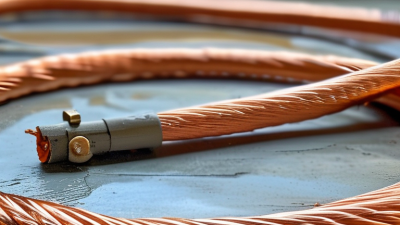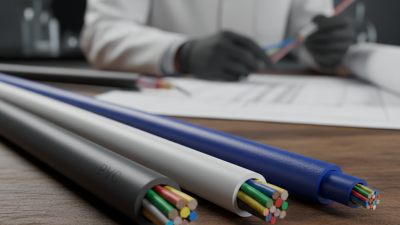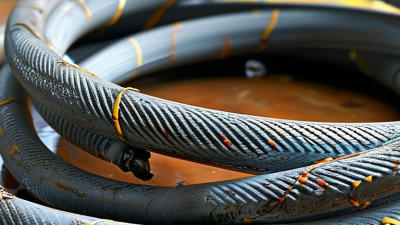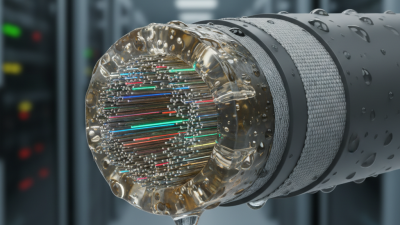
Choosing the right Sheath Cable Material begins with the installation environment, not with price alone. A cable buried beside oily machinery faces different risks from one exposed to sunlight, moisture, or repeated bending. PVC may offer economical protection for general applications. Polyethylene can provide strong moisture resistance. PUR often performs better where abrasion and flexibility matter. Each option has limits.
Dr. Samir Karmakar, a cable-materials researcher, has said, “A sheath must be selected for the environment, not merely the conductor.” This principle deserves careful attention. Reviewers should examine temperature range, voltage level, chemical exposure, ultraviolet radiation, flame performance, and mechanical stress. They should also check the manufacturer’s test data and applicable cable standards. A glossy datasheet is not enough.
Field experience reveals uncomfortable details. A sheath can appear intact while becoming brittle after years of heat. A flexible cable may fail early when dragged across a rough surface. I have also seen material choices based on habit rather than evidence. That approach feels efficient, but it can create expensive replacements later. No single Sheath Cable Material succeeds everywhere. The best decision balances service conditions, expected life, installation method, and maintenance access. It should also consider recycling and safe disposal requirements. When evidence is incomplete, pause and ask better questions. The cheapest option may still be suitable. It may also be the wrong option. This guide explains how to compare materials with practical judgment, reliable documentation, and a clear understanding of real operating conditions.
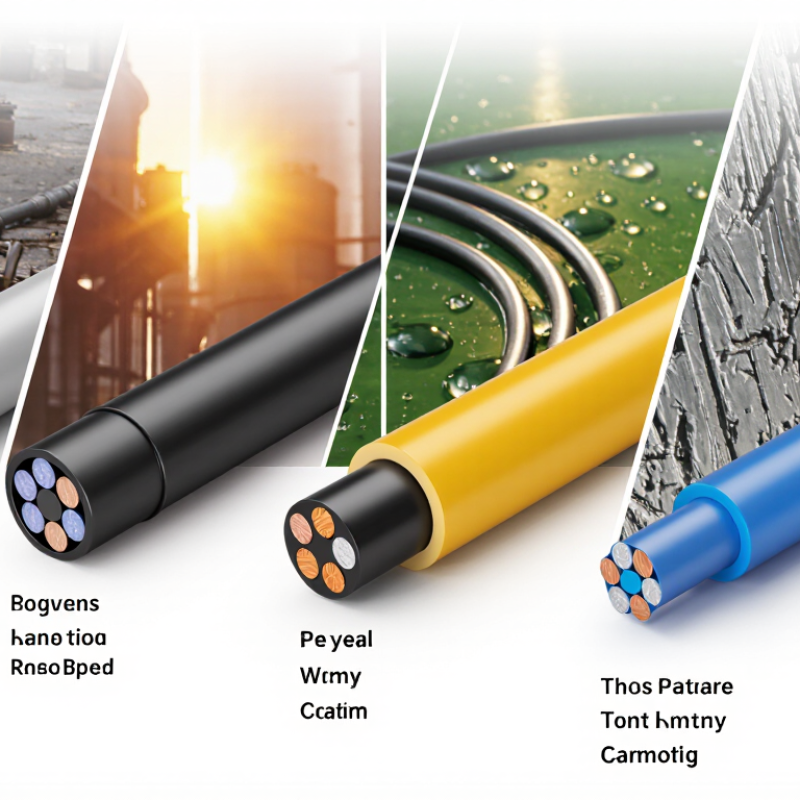
A sheath is the cable’s outer protective layer, not a decorative coating. It shields insulation and conductors from water, sunlight, abrasion, oils, chemicals, and impact. Material choice affects service life, fire behavior, flexibility, and maintenance risk.
The International Energy Agency’s Global Energy Review 2025 reported that electricity demand grew by about 4% in 2024. Its Electricity Grids report estimates that 80 million kilometers of grids must be added or refurbished by 2040. More cables mean more exposure to difficult sites.
PVC is economical and suitable for many indoor installations. Polyethylene offers strong moisture resistance and performs well outdoors. Low-smoke, halogen-free compounds can reduce corrosive smoke during a fire. Thermoplastic polyurethane provides useful abrasion and oil resistance, but it may cost more. No material wins everywhere. The installation environment decides.
Check temperature, bending cycles, sunlight, water contact, chemicals, and expected mechanical stress. A cable beside a machine may need a tougher sheath than one inside a dry conduit.
IEC 60502-1 and IEC 60332 test important cable properties, but compliance alone does not guarantee a perfect selection. That is an easy mistake.
Review the full datasheet, installation method, and maintenance history. In practice, a slightly higher material cost can prevent repeated replacement, although real conditions often differ from laboratory assumptions.
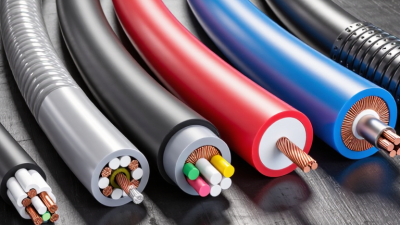
Before selecting a sheath material, define the cable’s actual operating environment. Record minimum and maximum temperatures, sunlight exposure, humidity, water contact, chemicals, vibration, and bending frequency. A cable inside a dry control room faces different risks from one buried near industrial drainage. Moisture changes everything. Standing water can accelerate jacket damage, while ultraviolet radiation can embrittle exposed polymers. The IEA’s Electricity 2024 report forecasts global electricity demand to grow by about 4% annually from 2024 to 2026. More installations may also mean harsher and more varied cable locations.
Temperature needs careful interpretation. IEC 60502-1 commonly permits 90°C conductor operation for XLPE-insulated power cables, but this does not automatically define the sheath’s continuous rating. Check both sustained temperature and short-term peaks near heaters, rooftops, or machinery. For chemical exposure, request compatibility data for oils, acids, alkalis, cleaning agents, and solvents. Small concentrations can still matter after years of contact. A material chart is not enough.
A material chart is not enough.
Mechanical conditions deserve equal attention. Measure the minimum bend radius, pulling tension, crushing risk, vibration, and repeated movement. In wet soil, consider water-blocking construction and verified longitudinal water penetration performance. For buildings and tunnels, review IEC 60332 flame tests, IEC 60754 acid-gas limits, and IEC 61034 smoke-density requirements. Test evidence matters. Yet laboratory results may not reproduce combined heat, abrasion, and chemicals in the field. That imperfect gap should be recorded during design review, not ignored.
How to Choose the Right Sheath Cable Material?
Which Sheath Materials Suit Different Applications?
Sheath selection starts with the environment, not the cable price. PVC suits general indoor wiring, control panels, and dry industrial spaces. It offers good abrasion resistance and cost control. Polyethylene performs better outdoors because it resists moisture and ultraviolet exposure. For moving equipment, polyurethane provides stronger abrasion and oil resistance. It is often useful around robots, conveyors, and machine tools.
Low-smoke zero-halogen materials suit hospitals, tunnels, stations, and crowded buildings. They reduce corrosive smoke during fire conditions. However, they may cost more and require careful mechanical testing. The International Energy Agency’s Electricity 2024 report expects global electricity demand to grow by about 4% annually through 2026. More infrastructure means more varied cable environments. Grand View Research also reports a projected 4.2% compound annual growth rate for the global wire and cable market from 2024 to 2030. These figures support careful material planning, not automatic material upgrades.
Tips: Check temperature, moisture, chemicals, sunlight, movement, and fire requirements together. Verify flame performance against IEC 60332. For low-smoke applications, review IEC 60754 and IEC 61034 results. Ask for test reports, not only catalogue claims. I have seen suitable cables fail because the bend radius was ignored. A perfect sheath still needs correct installation. Sometimes, the cheapest option is reasonable. Sometimes, it becomes an expensive mistake.
When comparing sheath materials, start with the working environment, not the purchase price. PVC suits many indoor installations and offers dependable flexibility at a modest cost. Polyurethane handles abrasion, oils, and repeated movement more effectively. Rubber performs well under heat, cold, and mechanical stress, but it can add weight and expense. Ask for test data on bending cycles, temperature range, UV exposure, and abrasion resistance.
Safety requires more than a flame rating. In crowded buildings, low-smoke, halogen-free materials can reduce toxic fumes during a fire. However, they may need tighter processing controls and can cost more. Check documented tests for flame spread, smoke density, insulation compatibility, and environmental ageing. A sheath should also resist cracking after years of bending. That detail matters.
Cost comparison should include installation, maintenance, replacement, and downtime. A cheaper PVC cable may become expensive in a robotic chain if it fails early. A premium material is not automatically the best choice. I have seen projects over-specify cables for mild environments, wasting budget without improving safety. A spreadsheet can mislead. Compare equivalent test conditions, not impressive-looking claims. Leave room for uncertainty, because actual routing, cleaning chemicals, and operator habits can differ from the original design.
Choosing the right sheath cable material requires more than comparing temperature ratings. The sheath protects conductors from moisture, chemicals, abrasion, sunlight, and mechanical stress. PVC suits many indoor installations and offers cost control. Polyethylene performs well outdoors because it resists water and weathering. Low-smoke, halogen-free compounds support crowded public spaces. Thermoplastic polyurethane may be better where repeated flexing or abrasion occurs.
Selection should begin with the actual installation environment. Record the minimum and maximum temperatures, bending frequency, oil exposure, sunlight, and expected service life. Do not trust a generic “industrial grade” description. Ask for test data covering tensile strength, elongation, flame behavior, smoke emission, UV resistance, and chemical compatibility. Check whether the reported values match the finished cable, not only the raw compound.
Verification needs physical evidence. Review the technical datasheet, material declaration, batch records, and independent laboratory reports. Confirm testing against the project’s required standards, such as applicable IEC or national requirements. Inspect sample surfaces for cracks, uneven extrusion, tackiness, or poor marking. Perform bending and abrasion checks when the cable will move repeatedly. A neat datasheet can still mislead. Field conditions are rarely perfect. I would also test a retained sample after heat, moisture, and chemical exposure. The result may challenge the original choice, which is useful. Cost remains important, but replacing failed cable inside a sealed installation can be far more expensive.
| Sheath Material | Typical Continuous Service Temperature | Flexibility | Key Resistance Properties | Flame and Smoke Characteristics | Suitable Environments | Main Limitations | Recommended Verification Checks |
|---|---|---|---|---|---|---|---|
| PVC | Approximately −40°C to +70°C or +90°C, depending on formulation | Good for general-purpose flexible cables | Good abrasion resistance; fair resistance to water, oils, and many chemicals; performance varies by plasticizer system | Can be formulated for flame resistance; burning PVC may release hydrogen chloride and dense corrosive smoke | Indoor power, control, instrumentation, and general industrial installations | Less suitable for high-temperature, low-smoke, or severe oil and solvent exposure | Check temperature rating, cold-bend performance, oil resistance, flame test, smoke density, and acid-gas emission |
| Polyethylene (PE or MDPE) | Approximately −60°C to +75°C, depending on grade and installation conditions | Low to moderate; generally stiffer than PVC and elastomeric materials | Very good moisture resistance; good chemical resistance; good abrasion resistance; may be vulnerable to some solvents and stress cracking | Usually burns readily unless specially modified; smoke and flame performance must be verified for the compound | Outdoor, buried, telecommunications, utility, and moisture-exposed applications | Limited flame performance; reduced suitability for repeated flexing and high-temperature service | Check UV aging, water absorption, environmental stress cracking, tensile retention, elongation, and flame behavior |
| Thermoplastic Polyurethane (TPU) | Approximately −40°C to +90°C; some grades reach about +105°C | Very good; suitable for repeated flexing when correctly specified | Excellent abrasion, tear, impact, and flex-fatigue resistance; oil and hydrolysis resistance depend on polyester or polyether chemistry | Standard TPU may not meet stringent flame requirements without additives; smoke and toxicity data must be verified | Robotics, drag chains, portable equipment, industrial machinery, and harsh mechanical service | Higher cost than basic PVC; some grades are sensitive to hydrolysis, heat, or specific chemicals | Check flex-cycle life, abrasion loss, hydrolysis resistance, oil immersion, low-temperature flexibility, and flame testing |
| Polyurethane (PUR) | Approximately −40°C to +90°C, with specialized grades available outside this range | Excellent for continuous movement and torsional applications | Excellent abrasion, notch, tear, and mechanical impact resistance; good resistance to oils and coolants in suitable grades | Flame performance is compound-specific and may require additional testing or a dedicated flame-retardant formulation | Machine tools, automated equipment, moving systems, and cable tracks | Some formulations have limited resistance to hot water, steam, strong acids, or prolonged high temperatures | Check dynamic bend radius, torsion cycles, coolant resistance, abrasion, hydrolysis, and temperature aging |
| Thermoplastic Elastomer (TPE) | Typically −40°C to +105°C, depending on polymer family and formulation | Good to excellent; designed for flexible cable constructions | Good flexibility and impact resistance; oil, chemical, and abrasion performance varies widely among TPE families | Can be formulated for low smoke and flame resistance; the exact result must be confirmed by testing | Flexible control, sensor, communication, and industrial cables | “TPE” covers many compounds, so performance cannot be predicted from the name alone | Request the exact compound data sheet and verify hardness, tensile strength, elongation, oil resistance, flex life, and flame performance |
| Low-Smoke Zero-Halogen Polyolefin (LSZH) | Commonly −30°C to +90°C; higher-temperature grades are available | Moderate to good, depending on filler loading and construction | Good moisture resistance; chemical and abrasion resistance vary; some formulations can be less flexible than PVC | Designed for low smoke and low corrosive-gas emissions; flame performance is formulation-specific | Public buildings, transportation, data facilities, tunnels, and confined spaces | May have lower mechanical strength, higher processing sensitivity, or greater moisture uptake than conventional PVC | Verify smoke density, acid-gas emission, flame spread, oxygen index, tensile properties, and water absorption |
| Chlorinated Polyethylene (CPE) | Approximately −40°C to +90°C, depending on chlorine content and formulation | Moderate; can be flexible but is generally less suitable for high-cycle motion than PUR or TPU | Good resistance to oils, weathering, ozone, heat, and many industrial chemicals | Can provide good flame performance, but combustion may release corrosive chlorine-containing gases | Industrial power, control, outdoor, and oil-resistant cable applications | May be heavier and less environmentally preferable where halogen-free requirements apply | Check oil immersion, ozone aging, weathering, flame, acid-gas emission, tensile retention, and cold-bend properties |
| Silicone Rubber | Approximately −60°C to +180°C; some specialized constructions operate above this range | Excellent over a wide temperature range | Excellent heat, cold, ozone, and weather resistance; moderate tear and abrasion resistance; may swell in some oils and solvents | Can offer good flame performance, but burning may produce silica-based residue; exact smoke behavior requires testing | High-temperature equipment, heaters, lighting, engines, and outdoor applications | Lower cut and abrasion resistance than PUR; relatively high material cost; may attract dust in some conditions | Check high-temperature aging, dielectric strength, tear strength, abrasion, oil swelling, ozone, and flame behavior |
| Fluoropolymer | Approximately −60°C to +200°C or higher, depending on the specific fluoropolymer | Moderate; specialized flexible grades are available | Excellent resistance to oils, fuels, solvents, acids, bases, heat, and weathering | Often provides good flame resistance and low smoke, but performance differs among fluoropolymer types | Aerospace, chemical processing, high-temperature, laboratory, and demanding electrical applications | High cost; some grades have limited mechanical toughness, difficult processing, or reduced flex life | Verify the exact polymer type, temperature aging, chemical immersion, flex life, dielectric properties, and flame behavior |