Leave Your Message

Why Choose LSZH Irradiated Insulating Cable Material?

Choosing Lszh Irradiated Insulating Cable Material can help cable designers balance insulation performance with reduced smoke and halogen-free material requirements. The choice matters in enclosed spaces, where cable routes may pass behind wall panels, through equipment rooms, or beneath crowded floors. In a fire, low-smoke, halogen-free materials are intended to reduce certain hazards, but they do not make a cable fireproof or risk-free.

Irradiation modifies the polymer structure, which can improve heat resistance and help insulation retain its shape under demanding conditions. The actual results depend on the resin blend, irradiation level, cable design, and manufacturing controls. That matters. A datasheet alone may not tell the whole story; engineers should review relevant test reports and confirm that the finished cable suits its intended temperature, voltage, and installation environment. Look closely at ageing, electrical, flame, and smoke performance data. Ask how samples were tested, too.

For procurement teams, practical details count: extrusion consistency, surface finish, dimensional stability, and reliable supply can affect production just as much as a headline property. Short samples help. Still, selecting this material is not automatic, and a promising result from one formulation may not carry over to another. This article examines why irradiated LSZH insulation is considered, what evidence to request, and where its limitations deserve careful attention. The goal is a better-informed material choice, not an assumption that one compound fits every cable.
Why Choose LSZH Irradiated Insulating Cable Material?

What Is LSZH Irradiated Insulating Cable Material?

LSZH irradiated insulating cable material is a cable insulation compound designed to release limited smoke and no halogen acids when exposed to fire. LSZH means low smoke zero halogen. Its base polymers are commonly blended with flame-retardant additives, often mineral fillers. The exact formulation varies, so the label alone does not describe every performance detail.

“Irradiated” refers to treatment with controlled radiation, commonly after the insulation is extruded onto a conductor. This process links polymer chains into a network, helping the insulation resist heat deformation and retain mechanical strength. In practical terms, the coating around a copper wire is less likely to soften under elevated temperatures. Dose and compound design matter.

Not fireproof. Low-smoke performance does not mean zero smoke or zero risk. Test results depend on the finished cable, including its wall thickness and construction. The terminology can sound more reassuring than it is; checking product test data is a sensible step. And specifications can differ.

How Is the Insulation Made and Cross-Linked?

LSZH irradiated insulation begins as a carefully blended compound. Polymer resin is mixed with flame-retardant mineral fillers and other additives. Good dispersion matters; clumps can create weak spots. The mixture is heated and pushed through an extrusion die around the conductor, forming an even insulating layer. Its surface should look smooth, without obvious lumps or gaps. Small defects can matter.

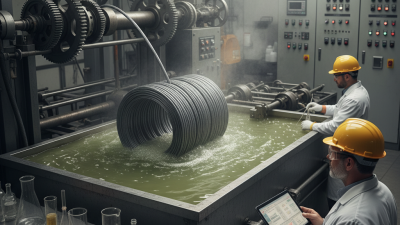
After extrusion, the insulated cable passes through a controlled electron-beam treatment. The radiation creates links between polymer chains, forming a cross-linked structure. This helps the insulation hold its shape at elevated temperatures and resist deformation. The dose, line speed, and insulation thickness must be controlled together. Too little treatment may leave weak cross-linking; too much can damage the material. There is no shortcut here.

Tips: Check the compound’s dispersion and the insulation’s thickness before irradiation. Keep samples for testing, including hot-set and tensile checks. These results help confirm that processing conditions are consistent.

A finished surface alone cannot prove proper cross-linking. Testing is essential, and results depend on the specific compound and cable design. LSZH describes low-smoke, halogen-free characteristics; it does not mean smoke is impossible. That distinction is easy to overlook.

Why Choose LSZH Irradiated Insulating Cable Material? How Is the Insulation Made and Cross-Linked?

LSZH insulation compounds are blended and compounded, then extruded around the conductor. Electron-beam irradiation forms cross-links in the polymer after extrusion, helping the insulation retain its properties under heat. Low-smoke, zero-halogen formulations are designed to limit smoke and corrosive halogen-acid emissions during a fire. The chart shows process order only; the step numbers are not measured performance data.

What Safety and Performance Benefits Does It Offer?

In a cable fire, smoke can obscure exits within minutes. LSZH (low-smoke, zero-halogen) insulation is designed to limit dense smoke and avoid halogen-acid gases when exposed to heat. This can reduce corrosive residues around equipment and help keep evacuation routes more visible. It does not make smoke harmless; burning materials can still release hazardous products. Details matter. Formulation, cable construction, and verified test conditions all shape the result.

Irradiation creates cross-links within the polymer, helping the insulation resist heat-related softening, deformation, and abrasion. In a cable tray, this can help the insulation withstand repeated contact with neighboring cables. Near a warm motor, better heat resistance may support reliable service within the material’s rated limits. Performance depends on the specific compound, though. Some formulations can be stiffer, making tight bends harder during installation. Check the specified bend radius and test data for smoke, flame, and electrical performance before selecting a material.

Where Is This Cable Material Commonly Used?

LSZH irradiated insulating cable material is commonly used where many people share enclosed spaces. Rail stations, metro cars, tunnels, airports, and public buildings are typical examples. In these settings, cable routes may run behind wall panels, beneath floors, or above crowded platforms. Access can be difficult.

The LSZH compound is designed to release less smoke and fewer corrosive halogen gases during a fire than conventional halogen-containing materials. Irradiation crosslinks the insulation, which can improve its heat resistance and mechanical stability. That matters. In hospitals and data centers, dependable cable performance supports essential lighting, alarms, communications, and control systems. Ships and industrial facilities may also use these cables in confined or equipment-dense areas.

Still, the material alone does not make an installation safe. Cable construction, fire-performance ratings, connectors, and installation conditions all matter. A specification that works in a dry control room may not suit a damp tunnel or a vibrating rail vehicle. Check the project requirements and test documentation before selection. This step is easy to overlook. The cable’s actual performance depends on the complete design, not just the LSZH label.

What Factors Guide Material Selection?

Selecting LSZH irradiated insulating cable material starts with the installation environment. A subway tunnel, control cabinet, and outdoor tray impose different heat, moisture, bending, and fire risks. Check the conductor temperature, voltage, expected service life, and minimum bend radius. Then verify that the insulation retains flexibility after thermal aging. More crosslinking is not automatically better; excessive stiffness can complicate tight routing.

Fire performance needs separate evidence. IEC 61034-2 defines a test method for measuring smoke density, while IEC 60754-2 measures acidity and conductivity of gases released during combustion. Many cable specifications use targets of pH at least 4.3 and conductivity no more than 10 μS/mm. These are specification targets, not universal pass limits under every application. Ask for test reports covering the finished cable, not just raw compound.

Irradiation dose also guides selection. Request dose records alongside tensile strength, elongation, heat-aging, and flame-test results. A small bend sample can reveal handling problems before production. Check batch consistency, too. Paper results help, but installation conditions may differ from laboratory tests; that gap deserves attention. When comparing materials, weigh low smoke and halogen-free performance against processability, cost, and the cable’s actual duty cycle.

Why Choose LSZH Irradiated Insulating Cable Material? — What Factors Guide Material Selection?

Selection factor Why it matters What to check Practical selection guidance
Smoke and halogen performance In an enclosed space, reduced smoke and halogen-acid gas release can help limit visibility loss and corrosive damage during a fire. “LSZH” performance depends on the material formulation and the test requirements. Review the specified smoke, halogen-acid gas, and corrosivity test methods, such as IEC 61034-2 and IEC 60754-1/-2, where applicable. Set project-specific acceptance criteria and confirm results for the finished cable construction; do not rely on the LSZH label alone.
Flame performance Low-smoke, halogen-free composition does not by itself establish flame-retardant performance. Cable design and installation conditions also affect fire behavior. Identify the required flame-propagation test and installation category. IEC 60332 series tests cover different cable and installation arrangements. Choose a compound and finished-cable design tested to the applicable project or regulatory requirement.
Operating temperature Irradiation crosslinking can improve resistance to heat-related deformation compared with a comparable uncrosslinked compound, but the allowable temperature is formulation- and cable-design-specific. Check the manufacturer’s declared continuous conductor temperature, short-circuit rating, and supporting qualification data for the finished cable. Match ratings to normal operation and fault conditions; do not infer a temperature rating from “irradiated” alone.
Mechanical durability Crosslinking may improve properties such as resistance to deformation and some forms of abrasion, while the actual result depends on the polymer blend, irradiation process, and cable construction. Review tensile, elongation, aging, and relevant mechanical tests under the applicable cable specification, such as IEC 60811 methods where referenced. For repeated flexing, installation pulling, or abrasion exposure, request data that reflects the actual service conditions.
Chemical and moisture exposure Resistance varies substantially with the compound. Oils, cleaning agents, fuels, water, and other chemicals can affect insulation differently. Identify the specific substances, concentrations, temperatures, and exposure duration; check compatibility data or test results for those conditions. Select against the real environment rather than assuming all LSZH irradiated materials have broad chemical resistance.
Electrical properties Insulation must maintain suitable dielectric performance over the intended voltage, temperature, and service life. Verify the cable’s voltage rating and relevant electrical tests, including insulation resistance and dielectric withstand, as required by its specification. Use data for the complete cable system and confirm suitability for the intended voltage and installation.
Installation and processing Material behavior during extrusion, irradiation, and cable installation can affect consistency, dimensions, and handling. Crosslinked insulation may not be remeltable in the same way as thermoplastic insulation. Check processing controls, dimensional tolerances, jointing and termination requirements, and installation instructions. Confirm compatibility with the cable manufacturer’s production process and the installer’s tools and procedures.
Standards and documentation Requirements vary by application, jurisdiction, and cable type; a material test alone may not demonstrate compliance of the finished cable. Review applicable product standards, test reports, declared ratings, and traceability documentation. Specify the required standards and acceptance criteria in the purchase documents, and request finished-cable evidence.
Cost and lifecycle needs Material price is only one part of selection; service life, maintenance access, fire-safety requirements, and replacement difficulty can influence total lifecycle value. Compare qualified options against the project’s performance requirements, expected service conditions, and lifecycle priorities. Choose the least complex material that meets all verified requirements, rather than paying for properties the application does not need.

Note: Performance depends on the specific compound and finished-cable design. Confirm test methods, limits, and ratings against the applicable project specification and local requirements.