How to Choose the Right Optical Cable Filling Gel for Your Needs?
Choosing the right Optical Cable Filling Gel is crucial for effective fiber optic installations. Industry expert, Dr. Emily Chen, emphasizes, "The right gel impacts both performance and longevity." Different projects demand varying characteristics from the filling gel.
The quality of Optical Cable Filling Gel influences signal integrity and protection against moisture. Many installers overlook this aspect. Selecting an inferior gel can lead to long-term issues. For example, if the gel doesn't offer adequate thermal stability, it may degrade faster.
With multiple options available, it's essential to understand specific project needs. Gel viscosity, operating temperature range, and compatibility with cable materials must all be considered. Not all gels meet every demand, and that’s where careful selection becomes vital. Recognizing these factors can prevent costly mistakes in the future.
Understanding the Purpose of Optical Cable Filling Gel
Optical cable filling gel serves a crucial purpose in the performance and durability of fiber optic cables. This specialized gel protects against moisture intrusion and provides mechanical support. It plays a significant role in preventing damage to the fibers inside the cable. When selecting the right filling gel, it's essential to understand its properties and applications.
Choosing the appropriate filling gel requires careful consideration of the installation environment. For outdoor use, a gel that is resistant to extreme temperatures and UV exposure is vital. In indoor settings, a gel that minimizes fire hazards may be preferred. While these differences seem minor, they can significantly affect performance in the long run.
Tips: Ensure compatibility with cable materials to avoid chemical reactions. Test the gel in a controlled environment before full-scale application. Also, consider the gel's viscosity; a thicker gel may offer better protection but can be more challenging to work with.
Reflect on the balance between performance and ease of use. Sometimes, the more effective solution may not be the easiest to install. Careful assessment of your specific needs will lead to a more effective choice. Finding the right filling gel may take time, but the benefits can outweigh the initial challenges.
Understanding the Different Types of Optical Cable Filling Gel
Identifying the Types of Optical Cable Filling Gels Available
When selecting an optical cable filling gel, understanding the available types is crucial. There are primarily two categories:
water-blocking gels and non-water-blocking gels.
Water-blocking gels are designed to prevent moisture ingress, making them ideal for outdoor use. They create a barrier that protects fibers from environmental factors.
On the other hand, non-water-blocking gels are lighter and more flexible. They are often used in indoor installations where moisture is not a concern.
Each type of filling gel has its unique properties. For instance, some gels offer better adhesion to cable materials.
This can ensure that the integrity of the cable remains intact over time.
It's important to consider the specific conditions the optical cable will face.
Factors like temperature fluctuations and physical stress play a significant role in performance.
Also, compatibility with cable materials can vary. Testing a small sample before large-scale use might be a wise choice.
Some users may find that gels don’t work as expected. This could be due to environmental factors or incorrect application.
It's essential to follow manufacturer instructions carefully. Mistakes can lead to costly repairs later. Reflecting on past experiences can guide future decisions.
Choosing the right filling gel is not just a matter of preference; it requires a thoughtful evaluation of needs.
Evaluating the Environmental Conditions for Gel Selection
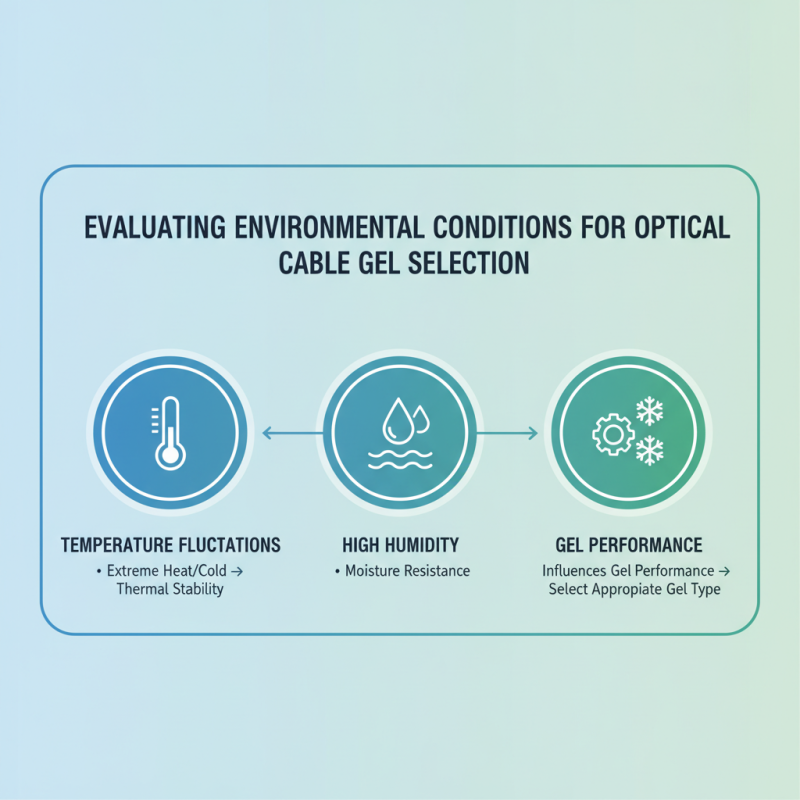
When selecting an optical cable filling gel, consider the environmental conditions it will face. Temperature fluctuations can influence gel performance. If a location experiences extreme heat or cold, a gel with better thermal stability is essential. High humidity can also pose challenges, potentially affecting the gel's moisture resistance.
Inspect the physical environment carefully. Outdoor installations may encounter UV exposure or chemical exposure. These factors can degrade some gel types over time. It's crucial to assess how long it will be in use and where. Short-term applications might allow more flexibility, while long-term setups demand robust performance.
Also, think about installations that run through varying terrains. For instance, underground settings may introduce contaminants that a standard gel cannot withstand. Complacency in this area could lead to costly failures. Regular assessment and expert consultation can guide you toward choosing the right gel for your specific needs, ensuring durability and reliability in diverse environmental conditions.
Assessing Compatibility with Cable Materials and Structures
When selecting an optical cable filling gel, it’s essential to assess compatibility with the cable materials and structures. Different fillers may interact with materials like polyethylene or PVC, affecting performance. Verify that the gel does not degrade the cable insulation. This interaction can lead to failures and increased maintenance costs over time.
Choosing the right gel also means considering the environment where the cables will be used. Gels designed for outdoor use must withstand UV exposure and extreme temperatures. Indoor cables may require gels that provide additional moisture resistance. Analyze application requirements carefully to ensure long-term reliability.
Tips: Always test a small sample of the gel before full-scale application. This can reveal potential issues with chemical interactions. Consult with technical experts who understand the specific properties of gel materials. Finally, keep abreast of industry standards for optical cable components, as they can evolve with new research and technologies. Always remain open to reassessing your choices as new options arise.
Considering Performance Factors: Viscosity, Thermal Stability, and Longevity
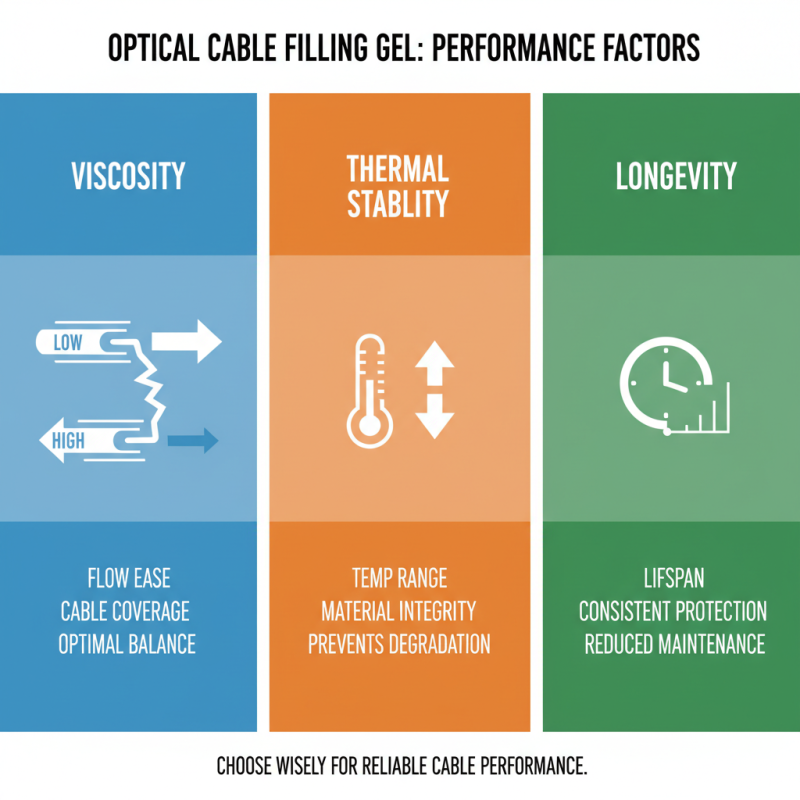
Choosing the right optical cable filling gel is crucial. Several performance factors must be considered, including viscosity, thermal stability, and longevity. Viscosity affects how easily the gel flows into the cable, ensuring complete coverage. A gel that flows too quickly may lead to inadequate filling, while one that is too thick can obstruct the process. Testing various viscosities can help identify the most suitable option for your specific cables.
Thermal stability is another vital consideration. Cables often endure extreme temperatures during their lifecycle. The filling gel must maintain its integrity under these conditions. Inadequate thermal stability can lead to degradation, affecting the cable's performance over time. It's essential to evaluate how different gels respond to heat and cold. Look for options that have been tested in a range of temperatures.
Longevity is linked to both viscosity and thermal stability. A gel that performs well initially may not last in the long term. This is a mistake that many make. Consider conducting accelerated aging tests to assess durability. Understanding these factors will help ensure that your optical cables perform reliably over their intended lifespan. Making informed choices leads to better performance outcomes.