Top 10 PP Cable Filling Rope Manufacturers Worldwide?
Top 10 PP Cable Filling Rope Manufacturers Worldwide? This question deserves more than a simple supplier list. Pp Cable Filling Rope supports cable geometry, protects internal elements, and helps maintain roundness during production. Its role is easy to overlook. That can become an expensive mistake.
This guide examines ten manufacturers serving international cable markets. It considers material consistency, rope diameter, tensile performance, moisture behavior, production capacity, and delivery reliability. Factory experience also matters. A technically strong product may still fail when batch control is weak or documentation arrives late.
Dr. W. A. Thue, a respected cable-design author, offers a useful practical principle: “Every cable component must earn its place.” This idea fits Pp Cable Filling Rope well. The rope may sit beneath layers of insulation and sheathing, yet its quality influences processing stability and finished-cable appearance.
The comparison will not treat global reach as automatic proof of excellence. Some manufacturers publish detailed specifications. Others provide limited technical evidence. That difference deserves attention. Product claims should be checked against samples, test reports, and customer feedback.
Real selection is rarely perfect. Price, lead time, customization, and performance can pull buyers in different directions. A lower-cost rope may reduce purchasing expense, but inconsistent diameter can increase production waste. A premium supplier may offer stronger control, though not always the fastest delivery.
This overview therefore focuses on practical evidence rather than promotional language. It is designed for cable producers, distributors, engineers, and procurement teams seeking dependable Pp Cable Filling Rope suppliers worldwide.
PP Cable Filling Rope: PP Density of 0.90–0.91 g/cm³ and Core Functions
PP Cable Filling Rope: PP Density of 0.90–0.91 g/cm³ and Core Functions
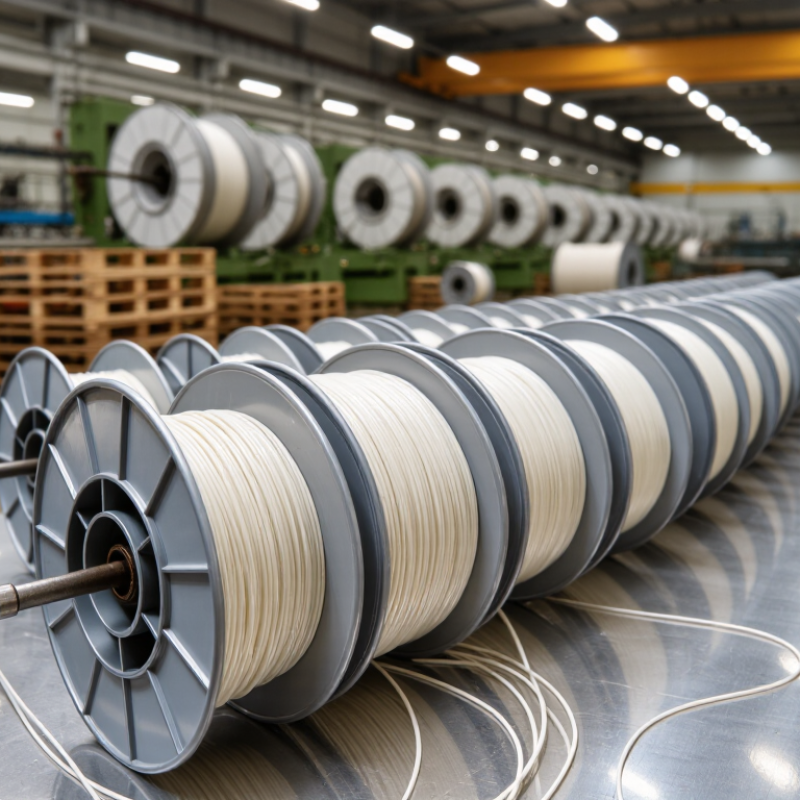
In cable production, polypropylene filling rope is valued for its low density, typically 0.90–0.91 g/cm³. This lightweight structure helps reduce the cable’s overall weight. It also supports efficient material use during large-scale manufacturing. The rope fills empty spaces between insulated cores and improves the cable’s roundness. A stable circular profile makes sheathing more consistent. It can also reduce uneven pressure during bending and handling.
From practical production experience, suitable rope diameter matters as much as density. Oversized filler can distort the cable core. Undersized filler may leave visible gaps. The rope should recover well after compression and maintain steady tension during stranding. Moisture resistance is another useful property, although filling rope alone should not be treated as a complete water-blocking system. Results depend on construction, storage, and processing conditions. That point is sometimes overlooked.
Tips:
Check density with a verified test method, not a supplier statement alone. Compare tensile strength, elongation, recovery, and diameter consistency across several samples. Store the rope in a dry, covered area. Dust can affect feeding performance. Trial production is still necessary. A laboratory result may not predict every machine’s behavior. Keep records of line speed, tension, and core diameter for future adjustments.
Global Standards: IEC 60502, ASTM D2256, and ISO 2062 Test Requirements
Top 10 PP Cable Filling Rope Manufacturers Worldwide: Global Standards and Test Requirements
Selecting among the top ten PP cable filling rope manufacturers requires more than comparing price or rope diameter. IEC 60502 defines important cable construction and performance expectations, including the role of filling materials in maintaining a round, stable cable shape. During factory inspections, buyers should check rope cleanliness, moisture control, lay consistency, and compatibility with insulation materials. A sample may look uniform but still vary under tension.
ASTM D2256 evaluates the tensile properties of textile yarns through controlled pulling tests. It helps assess breaking force, elongation, and repeatability. ISO 2062 also measures yarn tensile strength and elongation, often using specified conditioning and testing procedures. These results should be linked to the rope’s actual structure, not copied from unrelated yarn data. Small differences matter.
Ask for recent laboratory reports.
A dependable manufacturer should identify test conditions, specimen preparation, gauge length, pulling speed, and the number of tested samples. Independent verification adds confidence, especially when results appear unusually perfect. That deserves a second review. IEC 60502 compliance alone does not prove every filling rope meets ASTM D2256 or ISO 2062 requirements. The standards address different performance questions. Strong suppliers explain this distinction clearly and provide traceable batch records, retained samples, and corrective-action evidence when results fall short. Mistakes can happen. Transparent handling matters more than polished claims.
Top 10 Manufacturer Ranking: Capacity, Export Reach, Certifications, and MOQ
A credible Top 10 ranking of PP cable filling rope manufacturers should begin with production capacity, not online visibility. Leading producers often operate multiple extrusion lines and deliver 300 to 1,500 tons annually. Capacity matters when cable projects require steady monthly supply. Yet large output does not always mean better consistency.
Export reach separates strong suppliers from regional factories. The highest-ranked manufacturers usually serve buyers across Europe, Southeast Asia, the Middle East, and the Americas. They should provide export packaging, stable lead times, and clear customs documents. Experience with 20-foot and 40-foot containers can reduce loading problems. Small details matter.
Certifications should include documented quality systems, tested raw materials, and traceable batch records. Buyers should request tensile strength, elongation, moisture resistance, and color stability data. A factory offering only vague certificates deserves a lower position. It happens more often than expected. Minimum order quantity also affects the ranking. Flexible manufacturers may accept 500 to 1,000 kilograms for trial orders, while high-volume plants may require several tons. Lower MOQ supports product testing, but it can increase unit cost. The best evaluation balances capacity, export history, certification evidence, and realistic MOQ terms. A ranking can still mislead when factory audits, recent shipment records, and sample testing are missing. Ask for current evidence, not old brochures.
Top 10 PP Cable Filling Rope Manufacturers Worldwide
Anonymized benchmark ranking based on production capacity, export reach, certification coverage, and minimum order quantity.
The composite score is calculated on a 100-point scale: capacity 30%, export reach 25%, certifications 25%, and MOQ flexibility 20%. Lower MOQ scores indicate more flexible purchasing conditions.
Product Comparison: Denier, Tensile Strength, Twist, Packing, and Lead Time
Comparing the top 10 PP cable filling rope manufacturers requires more than checking price. Denier shows linear mass: one denier equals one gram per 9,000 meters. Higher denier usually means greater bulk and better void filling, but it can increase cable weight. ASTM D1577 provides the standard basis for denier measurement. Ask for test results, not only catalog ranges.
Tensile strength should be compared with the same test method, gauge length, and conditioning. ASTM D2256 is commonly used for yarn tensile testing. A practical sample may show 40–80 N, depending on denier, drawing ratio, and twist. Twist affects cohesion and handling. Low twist opens easily during cabling; excessive twist can reduce softness and slow production. Small details matter. I would request both breaking force and elongation.
Packing often ranges from compact coils to 10–25 kilogram bags, while export cartons need moisture protection and clear batch labels. The 2023 PlasticsEurope report placed polypropylene near one-fifth of global plastics production, supporting broad raw-material availability, though availability does not guarantee stable delivery. Lead time should be checked against stock status, minimum order quantity, and production capacity. Many suppliers quote 7–15 days for standard items and longer for custom denier or color. These figures are indicative, not promises. A buyer should compare three retained samples before approval.
Top 10 PP Cable Filling Rope Manufacturers Worldwide — Product Comparison: Denier, Tensile Strength, Twist, Packing, and Lead Time
| Rank |
Anonymous Manufacturer Profile |
Primary Production Region |
Typical PP Rope Construction |
Denier Range
(total) |
Typical Tensile Strength |
Twist Range
(turns/m) |
Standard Packing |
Typical Lead Time |
Common Cable Applications |
| 1 |
Manufacturer Profile 01 |
East Asia |
Multi-strand PP filler rope |
3,000–30,000 D |
1.8–4.8 kN |
55–95 |
10–25 kg coils |
10–20 working days |
Power and control cables |
| 2 |
Manufacturer Profile 02 |
South Asia |
High-bulk twisted PP rope |
2,000–25,000 D |
1.4–4.0 kN |
45–90 |
15–30 kg coils |
15–25 working days |
Low-voltage and data cables |
| 3 |
Manufacturer Profile 03 |
Southeast Asia |
Parallel-filament PP filler rope |
1,500–20,000 D |
1.1–3.6 kN |
40–80 |
10–20 kg coils |
12–22 working days |
Flexible communication cables |
| 4 |
Manufacturer Profile 04 |
East Asia |
Low-twist round PP filler rope |
2,500–28,000 D |
1.6–4.5 kN |
35–75 |
20–25 kg coils |
18–30 working days |
Medium-voltage cable cores |
| 5 |
Manufacturer Profile 05 |
Europe |
Compact twisted PP filler rope |
1,200–18,000 D |
0.9–3.2 kN |
60–110 |
8–20 kg coils |
20–35 working days |
Specialty and instrumentation cables |
| 6 |
Manufacturer Profile 06 |
Middle East |
UV-stabilized PP filler rope |
2,000–22,000 D |
1.3–3.8 kN |
45–85 |
15–25 kg coils |
15–28 working days |
Outdoor and utility cables |
| 7 |
Manufacturer Profile 07 |
South Asia |
Soft-touch PP yarn rope |
1,000–16,000 D |
0.8–2.9 kN |
30–70 |
10–20 kg coils |
10–24 working days |
Telecommunication and signal cables |
| 8 |
Manufacturer Profile 08 |
Southeast Asia |
High-density PP filler rope |
2,000–24,000 D |
1.5–4.1 kN |
50–100 |
15–30 kg coils |
18–30 working days |
Armored and submarine cable assemblies |
| 9 |
Manufacturer Profile 09 |
Europe |
Flame-retardant treated PP filler rope |
1,500–15,000 D |
1.0–2.8 kN |
55–105 |
8–18 kg coils |
25–40 working days |
Rail, industrial, and building cables |
| 10 |
Manufacturer Profile 10 |
North America |
Custom-size PP cable filler rope |
1,000–20,000 D |
0.8–3.5 kN |
40–90 |
10–25 kg coils |
20–35 working days |
Custom cable designs and retrofit projects |
|
Technical note: The values shown are representative industry benchmark ranges for polypropylene cable filling rope and are intended for preliminary product comparison. Denier refers to total linear density; tensile strength varies with yarn grade, rope diameter, twist, and test method. Final values, packaging, minimum order quantity, and delivery time should be confirmed against the supplier’s current technical datasheet and purchase quotation.
|
Regional Supplier Profiles: Asia, Europe, North America, and Emerging Markets
The global PP cable filling rope market is shaped by regional manufacturing strengths, material access, and export experience. Asia supplies many high-volume producers, especially in China, India, Vietnam, and Southeast Asia. These factories often offer broad diameter ranges, custom packing, and fast production cycles. Experienced buyers should inspect fiber uniformity, tensile performance, moisture resistance, and batch records rather than relying on price alone.
European manufacturers usually compete through process control, traceability, and specialized cable applications. Their facilities often maintain tighter diameter tolerances and clearer technical documentation. Some suppliers focus on low-smoke, halogen-free, or recyclable material options. However, premium specifications can increase lead times and purchasing costs. North American producers commonly serve regional cable plants with dependable logistics, responsive technical support, and shorter delivery routes. Their strength is often consistency, not the lowest quotation.
Emerging markets in Türkiye, Brazil, Mexico, and selected African regions are gaining attention. Local producers may provide flexible order quantities and useful proximity to growing infrastructure projects. Their capabilities vary widely. A factory visit, sample comparison, and independent tensile test remain sensible safeguards. This ranking is not absolute. Production capacity can change quickly, and public information is sometimes incomplete. Weather, resin sourcing, and port delays also affect real supplier performance. Quiet details matter. A neat sample can still hide uneven twisting inside the coil.