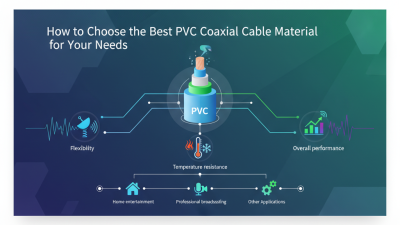
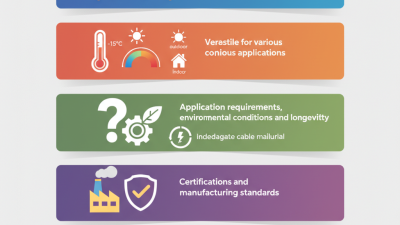
Top 5 Tips for Choosing the Right PVC Coaxial Cable Material?
When it comes to selecting the right PVC coaxial cable material, expert opinions are invaluable. John Smith, a leading figure in the telecommunications industry, emphasizes, "Choosing the right cable material can make or break your project." This statement highlights the importance of informed decisions in this critical area.
PVC coaxial cable materials play a vital role in communication systems. These materials impact signal quality and durability. Without the proper choice, performance issues may arise, leading to frustration and inefficiencies. In an industry where reliability is key, understanding the nuances of PVC materials is crucial.
Many people overlook factors like flexibility, temperature rating, and shielding effectiveness. Each of these aspects can significantly affect installation and long-term performance. Reflecting on these considerations not only aids in making the right choice but also encourages a deeper understanding of the impact of PVC coaxial cable materials.
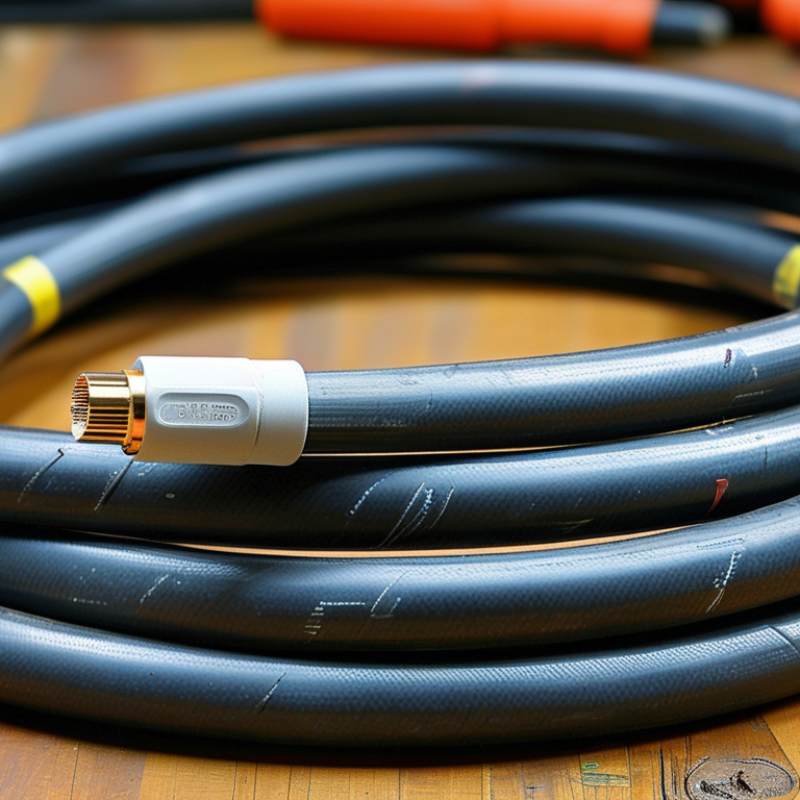
Understanding PVC Coaxial Cable: A Brief Overview of Its Composition
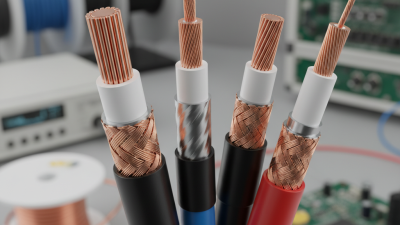
PVC coaxial cable is a common choice in many applications. It consists of multiple layers, each serving a specific purpose. The outer layer is made of polyvinyl chloride (PVC), which provides durability and resistance to elements. This outer layer protects the cable from environmental damage and mechanical wear.
Inside the PVC, there's a metallic shield, often made of copper or aluminum. This shield prevents interference and enhances signal quality. The dielectric material, usually foam or solid, insulates the inner conductor. Understanding these components is crucial for selecting the right PVC coaxial cable.
Quality matters, but so does composition. Different applications require distinct properties. Not all PVC cables are created equal. Assess the thickness of the insulation and shielding for optimal performance. This impacts signal integrity and cable longevity. A well-informed choice can lead to better results in your specific use case. Always think about the environment and usage conditions when making your decision.
Top 5 Tips for Choosing the Right PVC Coaxial Cable Material
| Tip No. |
Tip Description |
Material Properties |
Suitable Applications |
| 1 |
Consider the cable's flexibility. |
Good flexibility enhances installation ease. |
Indoor installations and tight spaces. |
| 2 |
Check for UV resistance. |
UV-resistant PVC prevents degradation. |
Outdoor applications exposed to sunlight. |
| 3 |
Evaluate the dielectric strength. |
High dielectric strength ensures signal integrity. |
High-frequency signal transmission. |
| 4 |
Select the right shielding type. |
Proper shielding reduces electromagnetic interference. |
Areas with high interference. |
| 5 |
Assess the cable's temperature rating. |
Higher ratings ensure performance under extreme conditions. |
High-temperature environments. |
Identifying Different Types of PVC Materials: Pros and Cons for Coaxial Cables
When selecting PVC coaxial cable materials, understanding different types is key. Two common variations include low-density and high-density PVC. Low-density PVC is flexible but can be less durable. It’s suitable for indoor use where environmental factors are minimal. However, its susceptibility to wear can be a drawback.
High-density PVC, on the other hand, offers better resistance to heat and chemicals. It is more robust, making it suitable for outdoor applications. But this increased strength comes at a price—it can be less flexible, complicating installation. The challenge lies in balancing flexibility and durability based on your specific needs.
PVC materials also have varying levels of fire resistance. Some cables may meet safety standards, while others might fall short. Always check the ratings to ensure compliance with safety regulations. While researching, look for certifications and test results. This helps assure reliability in your choice. Finding the right cable is not just about price; it’s about long-term performance and safety.
Key Electrical Properties: Impedance, Attenuation, and Dielectric Strength
When choosing PVC coaxial cable, consider key electrical properties like impedance, attenuation, and dielectric strength. Impedance reflects how much resistance the cable offers. A mismatch can lead to signal loss. It’s crucial to select a cable with the right impedance for your application.
Attenuation measures signal loss over distance. Higher attenuation means weaker signals, which can degrade performance. It’s important to evaluate the distance your signal needs to travel. Always remember that longer runs may require cables with lower attenuation ratings.
Dielectric strength is another important factor. This property determines the cable's ability to withstand voltage levels without breakdown. Poor dielectric strength can result in insulation failure. Choose cables that offer reliable dielectric properties, ensuring safety and performance. Each aspect plays a vital role in your overall system reliability. Consider these factors carefully; the right choice can make or break your installation.
Environmental Considerations: Evaluating Chemical Resistance and Temperature Range
When selecting PVC coaxial cable materials, understanding environmental factors is crucial. Chemical resistance is essential for durability. Many studies indicate that PVC can withstand a broad range of chemicals. However, it is essential to know the specific environment the cable will face.
Temperature range significantly impacts the performance of PVC cables. PVC typically performs well in temperatures from -20°C to 70°C. Beyond this range, rigidity can increase, leading to cracks. In contrast, extreme temperatures can also cause degradation in chemical resistance. The specific application should guide the choice in materials. Environmental reports suggest that exposure to UV light can reduce the lifespan of PVC materials, causing them to become brittle.
It’s worth noting that while PVC has numerous advantages, it also has limitations. A study by Industry Insights showed that PVC cables might not be suitable for high-temperature applications, particularly in industrial settings. Evaluating the specific needs of your project can reveal the potential shortcomings of PVC. A deeper dive into material properties and environmental interactions is key to making informed decisions.
Industry Standards and Certifications: Ensuring Quality and Performance Compliance
When selecting PVC coaxial cable materials, industry standards and certifications play a critical role. These standards ensure that the cables meet performance expectations and safety requirements. According to a report by the Institute of Electrical and Electronics Engineers (IEEE), cables not adhering to recognized standards can lead to signal loss and increased electromagnetic interference (EMI). Regular compliance checks are necessary to maintain quality over time.
Certifications like UL (Underwriters Laboratories) and IEC (International Electrotechnical Commission) demonstrate a product's reliability. For instance, cables meeting the UL 83 standard show better resistance to heat and flames. Yet, not all manufacturers prioritize these certifications, risking their products’ longevity and safety. A study by the National Institute of Standards and Technology (NIST) highlighted that 30% of cables tested didn't meet industry standards, raising questions about their performance.
Moreover, understanding the certifications can be overwhelming. Not all standards apply equally across different applications. Some may focus on environmental impact, while others assess durability. This inconsistency can lead to confusion for purchasers. A clear comprehension of these standards is vital when choosing an appropriate cable. The right decisions hinge on recognizing that not every seemingly compliant cable may fulfill the expected performance benchmarks.
Top 5 Tips for Choosing the Right PVC Coaxial Cable Material