China Top 10 PVC Cable Material Manufacturers
China’s cable sector depends on reliable compounds that perform consistently during extrusion, installation, and service. Pvc Cable Material is not a single, uniform product. Its formulation may vary with insulation or sheathing needs, flexibility, flame performance, processing conditions, and operating temperature. Small differences matter. A compound that runs smoothly on one production line may require adjustments on another.
This guide introduces ten PVC cable material manufacturers in China and offers a practical starting point for comparing them. It considers factors such as product range, manufacturing capabilities, quality-control practices, customization support, and communication with buyers. These details can help readers prepare better questions before requesting samples or quotations. However, a company profile alone cannot confirm product performance. Buyers should review current technical data sheets, clarify relevant test methods, and assess samples under their own production conditions. Not every supplier fits.
The ranking should be treated as an overview, not a universal verdict. Company information and product specifications can change, while cable designs differ by application. Even familiar terms may describe different formulation targets. That is easy to overlook. A careful comparison should connect each manufacturer’s stated capabilities with the buyer’s actual requirements, including color, hardness, processing behavior, and documentation needs. The aim is not to promise a perfect match, but to make initial research clearer and more grounded. Each supplier still deserves a closer review.
What PVC Cable Materials Are and Where They Are Used
PVC cable material is a formulated compound based on polyvinyl chloride resin. It usually contains stabilizers, lubricants, and fillers; flexible grades also use plasticizers. The recipe affects how easily the compound can be extruded, how it bends, and how it performs around heat or moisture. Not every grade fits.
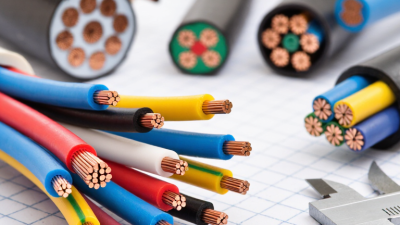
In a cable, PVC commonly serves as insulation around conductors or as an outer sheath. Insulation helps keep electrical paths separated, while a sheath protects against scuffs, dust, and everyday handling. You may find PVC-insulated cables in buildings, appliances, lighting systems, and control equipment. Flexible versions suit cords that move during use. A cable near a hot motor may need a different material or a carefully specified PVC grade.
Selection should consider conductor temperature, installation conditions, flexibility, and required test performance. For example, a cable pulled through a wall faces different demands from one repeatedly bent beside a desk. PVC can offer a useful balance of processability, durability, and cost, but it is not a universal solution. Plasticizer choice can affect long-term flexibility, and heat can accelerate aging. Details matter. A datasheet helps, though real operating conditions can still be easy to underestimate.
How China’s PVC Cable Material Industry Is Structured
China’s PVC cable material industry is organized around several connected roles. Resin suppliers provide the base polymer, while specialist compounders blend it with plasticizers, stabilizers, fillers, and colorants. Cable manufacturers then select compounds for insulation or sheathing, based on voltage class, flexibility, temperature range, and processing equipment.
Many suppliers serve more than one market. Some focus on general-purpose compounds for building wire; others develop flexible grades for appliance cords or tougher sheathing for industrial cables. Production often clusters near cable-making centers and logistics routes, which can shorten delivery times and make technical adjustments easier. A sample matters. Buyers typically check pellet consistency, surface finish, extrusion stability, and test results rather than relying only on a catalogue description.
Quality systems vary. That is worth noting. A supplier’s capacity figures do not prove that every batch behaves identically, especially when formulations or raw-material sources change. Practical evaluation may include trial extrusion, aging tests, and clear batch documentation. Smaller compounders can be responsive, but their process control may be less uniform; larger operations may offer broader testing, yet can be slower with low-volume custom requests. The structure is capable, but not perfectly tidy. Direct communication between compounder and cable producer often resolves specification gaps faster than paperwork alone.
Criteria for Evaluating PVC Cable Material Manufacturers
A reliable PVC cable material manufacturer should show control over formulation, mixing, and batch consistency. Ask how raw materials are inspected and how production changes are recorded. Small details matter. A clear technical data sheet should state the compound’s intended use, processing range, and relevant test results—not just broad performance claims.
Check evidence against your cable design. Tensile strength, elongation, volume resistivity, heat aging, and low-temperature flexibility can reveal different weaknesses. Request batch test reports and traceability records, then compare them with a production sample. A neat certificate is not proof by itself. Test methods and sample conditions should be clear, since results can vary.
Manufacturing capability matters too. Review quality controls, equipment maintenance, delivery consistency, and the process for handling nonconforming batches. If possible, observe how pellets are stored and how operators prevent contamination during feeding. Ask what happens when a formulation changes. Even a careful audit can miss a real production issue, so trial runs and periodic verification remain useful. There is no perfect checklist; some buyers still overlook how a compound behaves on their own extrusion line.
China PVC Cable Material Manufacturers: Evaluation Criteria
Suggested weighting for comparing manufacturers—not company rankings or measured market data.
Prioritize consistent product quality, relevant compliance documentation, and technical support. Adjust these suggested weights to suit your application, testing requirements, and sourcing priorities.
Profiles of Ten Chinese PVC Cable Material Manufacturers
Across ten Chinese PVC cable material manufacturer profiles, compare capabilities rather than relying on a simple ranking. Some producers focus on general-purpose compounds for building wire, while others develop flexible grades for appliance leads or cold-weather use. A useful profile explains the intended cable type, hardness range, processing behavior, and available technical data. Details matter. Ask whether the stated properties apply to a tested batch or only to a typical formulation.
Manufacturing experience shows up in practical details: stable pellet size, consistent color, and smooth extrusion through a trial die. Check datasheets for tensile strength, elongation, density, and test conditions. For flame-retardant or heat-resistant grades, request the specific test method and results; broad claims alone are not enough. Also ask about batch traceability, sample availability, and support when the compound causes surface roughness or uneven insulation thickness. A catalog can still leave gaps. Even a strong technical profile may not predict performance on your own equipment.
Tips: Compare samples using the same settings. Record melt behavior, surface finish, and any adjustment needed.
How to Compare Suppliers, Products, and Compliance Standards
When comparing China’s PVC cable material manufacturers, look beyond price and production capacity.
Ask for the same information from each supplier: formulation type, monthly output, lead time, and quality-control process. A polished sales sheet is not enough. Request recent batch certificates and a sample linked to its production lot. Details matter.
Compare materials against the cable’s actual use.
Flexible insulation may need different plasticizer levels from rigid sheathing. Check tensile strength, elongation, hardness, aging performance, and processing temperature in the technical data sheet. Then verify key figures with a test report or your own trial. A compound that runs smoothly on one extrusion line may behave differently on yours. Small differences count.
Compliance depends on the destination market and the finished cable, not just the raw compound.
Confirm which requirements apply, such as restricted-substance limits or relevant fire-performance tests, and ask for supporting reports. Check that document dates, product grades, and sample labels match. An audit can reveal storage conditions and traceability practices that a catalogue cannot. I would still treat paperwork as evidence, not a guarantee; independent testing may be worth the extra time.