Leave Your Message

Why Is an FRP Cable Strengthening Core Important?

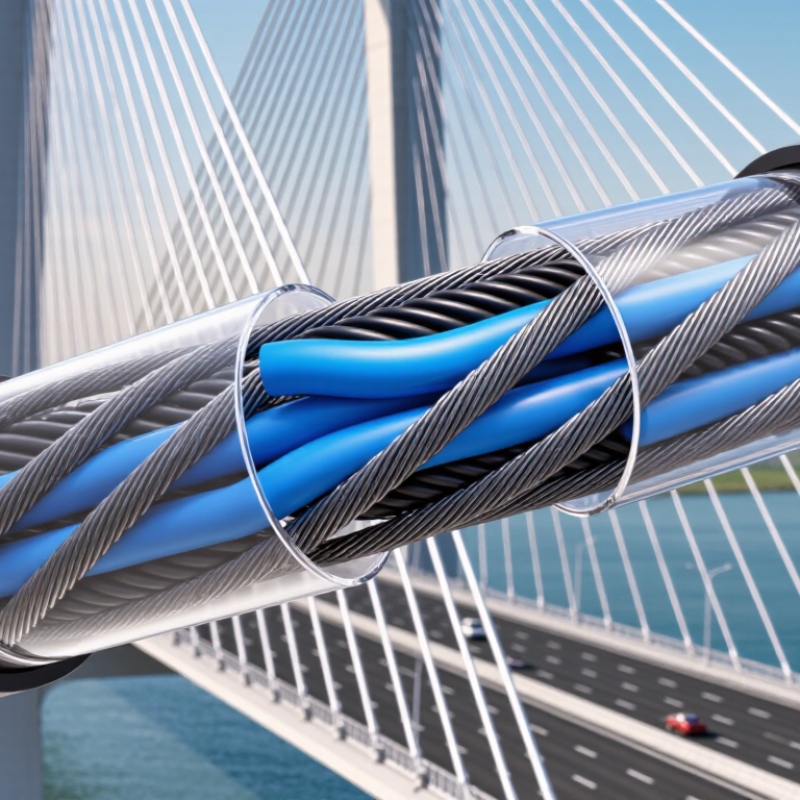
When a bridge cable carries traffic loads, wind pressure, and daily vibration, its inner strength member must perform quietly and consistently. This is where the Frp Cable Strengthen Core becomes important. It transfers tensile forces, limits elongation, and helps the cable maintain its shape under repeated loading. A damaged or poorly designed core can cause uneven stress, premature deformation, and difficult inspections.

Professor Antonio Nanni, a recognized authority on fiber-reinforced polymer systems, expresses the central principle clearly: “The material must be matched to the structural problem.” This principle applies directly to FRP cable design. Engineers must evaluate fiber type, resin quality, bond performance, moisture exposure, temperature changes, and installation tension. Carbon fibers may provide high stiffness, while glass fibers can offer a more economical balance for certain applications. The correct choice depends on the structure.

The core also supports durability. Unlike conventional steel, FRP materials do not rust when exposed to water and oxygen. However, they are not maintenance-free. Poor anchorage, ultraviolet exposure, manufacturing voids, or excessive bending may reduce service life. That limitation deserves attention. A strong cable is not created by fiber strength alone. It depends on testing, accurate calculations, careful handling, and regular inspection. Field experience shows that small installation errors can become serious weaknesses over time. This article examines how the Frp Cable Strengthen Core improves cable reliability, where its performance may be limited, and what engineers should check before selecting it for demanding infrastructure projects.
Why Is an FRP Cable Strengthening Core Important?

What Is an FRP Cable Strengthening Core?

An FRP cable strengthening core is the load-carrying center inside a fiber-reinforced polymer cable. It usually contains continuous carbon, glass, or aramid fibers held together by a resin matrix. The fibers provide tensile capacity, while the resin maintains alignment and transfers stress between filaments. A protective jacket may surround the core, but it does not replace the core’s structural function.

The core matters because cables often work under constant tension, vibration, moisture, and temperature changes. According to FHWA technical report HRT-06-117, FRP reinforcement can weigh about one-quarter as much as steel with comparable reinforcement capacity. ACI 440.1R-15 reports typical GFRP tensile strengths from approximately 483 to 1,600 MPa. These figures explain the attraction: lower handling weight and strong tensile performance. However, strength alone is not enough. Designers must check resin quality, fiber volume, anchorage, creep, fatigue, and the actual cable diameter. A cable may look robust. Its interface can still fail.

Tips: Request certified tensile, creep, and fatigue results for the complete cable system, not only raw fibers. Inspect cut ends and anchor zones carefully. Small defects can become serious under sustained loading. Field installation also deserves more attention than it usually receives. This is easy to underestimate. Use the manufacturer’s tested bend radius and environmental limits, then compare them with project conditions. Some specifications remain too optimistic, and that deserves honest review.
How Is an FRP Strengthening Core Designed and Manufactured?

Why Is an FRP Cable Strengthening Core Important?

An FRP strengthening core is designed around the cable’s expected load, span, and working environment. Engineers select glass, carbon, or aramid fibers according to tensile demands and durability requirements. Fiber alignment matters greatly. Poor alignment can create weak zones and uneven stress transfer. The resin must bind the fibers without adding unnecessary weight. A practical design also considers bending, moisture, temperature changes, and installation damage.

Manufacturing often begins with precise fiber placement and resin impregnation. Pultrusion can produce a consistent cross-section with controlled fiber content. Braiding or wrapping may improve flexibility around curved surfaces. The core then passes through curing, sizing, and dimensional inspections. Technicians check diameter, surface condition, resin distribution, and tensile performance. Small variations matter. A fraction of a millimeter can affect fit and load behavior.

Reliable production requires documented material batches and repeatable process settings. Test samples are pulled until failure, while engineers record strength, elongation, and failure patterns. These results help verify whether the core matches its design assumptions. Still, no manufactured core is perfectly uniform. Temperature changes, handling pressure, or incomplete impregnation can create unexpected weaknesses. That is why experienced teams combine laboratory data with field observations. A design may look correct on paper, yet installation feedback can reveal details that require revision.

What Functions Does the Core Perform in an FRP Cable?

Why Is an FRP Cable Strengthening Core Important?

The core is the cable’s main load-carrying element. It transfers tension through the fibers, resin, and protective outer layers. During installation, the core must resist pulling, bending, vibration, and local pressure. A damaged core can reduce capacity before visible cracking appears.

Its material also controls the cable’s weight and durability. ACI 440.1R-15 reports typical FRP densities between about 1.25 and 2.10 g/cm³, while steel is approximately 7.85 g/cm³. This difference can simplify lifting and reduce handling loads. The FHWA’s guidance on FRP bridge systems identifies corrosion resistance and high strength-to-weight performance as major engineering benefits. In wet or chloride-rich environments, the core does not rust like conventional steel. That matters around bridge decks, marine structures, and exposed anchorage zones.

The core must also transfer prestressing force safely into the anchorage. Fibers carry tension mainly along their length, so fiber alignment is critical. Resin binds the fibers and helps distribute stress, but resin quality cannot repair poor alignment. The fib Model Code guidance warns that bond, creep, fatigue, and environmental exposure require separate verification. The core is not magic. A cable may show impressive tensile data in a laboratory, yet perform poorly with weak grips, sharp bends, or inadequate spacing. Field inspections often reveal a practical weakness: installation damage is easier to create than to detect. Engineers should therefore check certified tensile properties, anchorage behavior, fatigue results, and temperature resistance before approving an FRP cable system.

How Does the Core Improve Cable Strength and Durability?

Why Is an FRP Cable Strengthening Core Important?

How Does the Core Improve Cable Strength and Durability?

An FRP strengthening core carries tensile forces during installation, pulling, and long-term sag control. Its glass-fiber structure offers high strength without adding excessive weight. Typical FRP density is about 1.8–2.1 g/cm³, compared with approximately 7.85 g/cm³ for steel. This difference can reduce handling strain on towers, trays, and installers. FRP also resists rust, moisture, and many corrosive environments. That matters near coastlines, chemical facilities, and underground ducts.

IEC 60794-1-2 testing covers tensile loading, crushing, impact, bending, and temperature cycling for optical cables. CIGRE technical guidance on composite-core conductors also highlights weight reduction and improved thermal stability. These tests reveal a practical truth: the core protects performance only when its resin, fiber alignment, and bonding are consistent. A small manufacturing defect may become a crack after repeated bending. I have seen teams focus on breaking load, while ignoring sidewall pressure during pulling. That is an expensive blind spot.

Tips: Match the core diameter to the cable design. Check tensile data after temperature cycling, not only at room temperature. Use controlled bending radii during installation. FRP is corrosion-resistant, but it is not damage-proof. Scratches, sharp clamps, and poor termination can still reduce service life. Manufacturer test reports should show the test method, conditioning period, and failure mode. Vague “high-strength” claims deserve careful review.

Why Is an FRP Cable Strengthening Core Important?

An FRP core carries tensile loads while keeping the cable lightweight and resistant to corrosion. The chart compares representative tensile-strength values for common cable core materials; actual performance varies with fiber type, resin system, and manufacturing process.

What Factors Should Guide FRP Core Selection?

Why Is an FRP Cable Strengthening Core Important?

What Factors Should Guide FRP Core Selection?

An FRP cable core carries the main tensile force in many strengthening systems. It can improve load resistance without adding much weight. In practical installation, selection should begin with the required force, span length, and structural condition. A high tensile rating alone can mislead. The core must also provide suitable stiffness, fatigue resistance, and controlled elongation under repeated loading.

Temperature, moisture, chemicals, and ultraviolet exposure deserve close attention. A core installed near a coastal deck may face saltwater and daily heating. An indoor beam may need different protection. Check the core’s diameter, surface texture, bend radius, and resin compatibility before ordering. Small mismatches can create poor bonding or difficult installation. Measure twice.

Testing data should come from traceable laboratory methods, not only a sales sheet. Look for tensile strength, elastic modulus, elongation, durability results, and manufacturing tolerances. Installation guidance matters too. Workers need practical details about anchorage, spacing, curing time, and handling damage. I have seen projects focus heavily on material strength while overlooking sharp bends and uneven bonding. That weakness is easy to miss. A qualified engineer should compare design assumptions with site conditions, inspection records, and applicable structural standards before approving the core.

Why Is an FRP Cable Strengthening Core Important? - What Factors Should Guide FRP Core Selection?

Representative material data and selection guidance for FRP cable strengthening cores

FRP Core Material Typical Tensile Strength Typical Tensile Modulus Typical Elongation at Break Approximate Density Corrosion Resistance Electrical Behavior Temperature and Moisture Considerations Typical Selection Advantage
E-Glass Fiber FRP 2.0–3.5 GPa 70–90 GPa 2.5–4.8% 2.5–2.6 g/cm³ Good Electrically nonconductive Generally stable in normal service; moisture and alkaline exposure require a compatible resin and protective jacket. Balanced strength, insulation, availability, and cost for general cable reinforcement.
Aramid Fiber FRP 2.8–3.6 GPa 70–130 GPa 1.8–4.0% 1.39–1.45 g/cm³ Very good Electrically nonconductive Low density is beneficial for installation; prolonged UV, moisture, and elevated-temperature exposure should be controlled with suitable coatings and jacketing. High strength-to-weight ratio and good flexibility for lightweight cable designs.
Carbon Fiber FRP 3.5–7.0 GPa 230–600 GPa 0.5–2.0% 1.75–1.95 g/cm³ Excellent Electrically conductive Low moisture absorption and strong dimensional stability; electrical isolation may be necessary where conductivity is unacceptable. Very high stiffness, low thermal expansion, and strong resistance to long-term deformation.
Basalt Fiber FRP 2.5–3.5 GPa 85–100 GPa 2.5–3.5% 2.6–2.8 g/cm³ Good to very good Electrically nonconductive Good resistance to moisture and many chemicals; actual performance depends heavily on resin formulation and surface protection. Useful where nonconductivity, mineral-fiber durability, and moderate mechanical performance are required.
Selection Factor Why It Matters in an FRP Cable Strengthening Core Recommended Evaluation Method Practical Design Priority
Required Tensile Load The core must carry the specified installation, operating, and accidental loads without fiber rupture or excessive permanent deformation. Compare the design load with the qualified minimum breaking load, including safety factors and environmental reduction factors. Very high
Tensile Modulus Modulus controls how much the cable stretches under load and influences sag, alignment, and load sharing. Check the stress–strain curve rather than relying only on ultimate strength. Very high
Creep and Stress Relaxation Long-term deformation can reduce tension, increase sag, or alter load distribution between the core and surrounding components. Review accelerated aging and long-duration tensile creep data at the expected service temperature. Very high for permanent installations
Bending Flexibility A core that is too stiff or brittle can be damaged during coiling, routing, termination, or repeated bending. Verify minimum bend radius, bend-cycle performance, and tensile retention after bending. High for flexible cable systems
Environmental Resistance Water, humidity, salt, chemicals, UV radiation, and alkaline environments can affect the resin, fiber interface, and protective layers. Use qualification tests that reproduce the intended exposure and measure retained tensile strength. High
Temperature Performance Heat can reduce resin stiffness, accelerate creep, and change the load transfer between fibers and matrix. Confirm glass-transition temperature, continuous operating temperature, and strength retention after thermal aging. High in hot environments
Electrical Insulation Nonconductive reinforcement can prevent unwanted current paths and may improve safety near energized systems. Check volume resistivity, dielectric strength, and insulation resistance under wet and aged conditions. Essential where electrical isolation is required
Thermal Expansion Mismatch between the FRP core and adjacent materials can create internal stress, dimensional change, or unstable cable tension. Compare the axial and transverse coefficients of thermal expansion with the complete cable construction. High for precision and temperature-variable systems
Core Geometry and Surface Finish Diameter, roundness, surface texture, and dimensional tolerance affect cable fit, resin bonding, friction, and manufacturing consistency. Specify dimensional tolerances, concentricity, surface condition, and compatibility with the surrounding jacket or matrix. High for reliable production
Manufacturing and Installation Compatibility The core must withstand pulling, stranding, twisting, tensioning, and termination without splitting, crushing, or fiber damage. Perform full-process trials using the intended equipment, bend radius, pulling tension, and termination method. High
Quality Consistency and Traceability Variations in fiber alignment, resin content, voids, and curing can cause inconsistent strength and premature failure. Require batch-level tensile, dimensional, resin-content, visual, and aging inspection records. Very high
Total Life-Cycle Cost The lowest purchase price may not provide the lowest cost if installation damage, maintenance, replacement, or downtime is significant. Compare material, processing, installation, inspection, maintenance, and expected service-life costs. Important for final selection

Note: The material values shown are representative ranges for commonly used fiber-reinforced polymer systems. Actual performance depends on fiber grade, fiber volume fraction, resin chemistry, curing conditions, core geometry, protective layers, test method, and service environment. Final selection should be based on qualification testing of the complete cable assembly.